Saturday, October 31, 2009

Kid Koala at Yugong Yishan

“It’s not against the law to have a good time,” said Eric San, more popularly known as DJ Kid Koala, to a packed crowd at Yugong Yishan this Thursday evening. In a way, it neatly summarized San’s raison d’etre as one of turntablism’s most easygoing characters, and he leapt from one feel-good musical moment to another in a sample-filled set that soon had the crowd as upbeat and enthusiastic as Koala himself.

San is Chinese-Canadian, and his “Lei ho” greeting was warmly welcomed by the Southerners (and fellow Overseas Chinese) in the crowd. Though he may speak Cantonese, judging by his almost exclusive use of English, it doesn’t sound like he speaks Mandarin. It’s doubtful the audience even noticed—it probably didn’t hurt that the number of foreign faces outweighed Chinese ones—and he got the crowd moving early on with some signature old school beats over some fuzzy grunge and ragga tracks. San also threw in a Wolfmother sample, perhaps a nod to his recent side project, The Slew, which features the bassist and drummer from the antipodean rock outfit.

Perhaps one of the appeals of a Kid Koala show is San’s utter lack of pretension. Sporting a 60s kung-fu hero bowl cut, he looked more like a naughty teenager in his bedroom, messing around with his parent’s records—the fire siren-like breakdown of his parents’ beloved “Moonriver” a chief offender—than a street cred-conscious connoisseur of cool. Whether leaping between records—as always, sans headphones—throwing in the occasional goofy voice sample or flexing his remarkable scratching skills, Koala’s cheeky, irrepressible grin rarely left his face as he hustled about his tables, sweat dripping down his face.

Koala has described DJing as sometimes akin to having records that he’s listened to take part in a “dating service,” and if Thursday night was anything to go by, San would make for a most interesting matchmaker. M.I.A. rubbed shoulders with ragtime jazz figures, and harmonica-blowing Delta bluesmen mingled with the cocktail dress socialites out of “Breakfast at Tiffany’s.”

After finishing his first set with signature record-as-trumpet crowd pleaser “Drunken Trumpet,” Koala returned, inviting two other DJs—opener DJ Jamming and a friend—to scratch alongside him.

Finally, after a cheerful, crowd-pleasing set, San ended with the haunting, moody “Videotape,” the closing track from Radiohead’s “In Rainbows.” It was a surprisingly mellow way to close, but perhaps echoed the cynical closing statements made by the ponderous (and talented) Chinese MC in the MLK shirt who opened, when he claimed “people in this world are only a little bit happy.”

In which, case, I strongly encourage them to come out in future for some groove therapy with Kid Koala.

Friday, September 25, 2009

Chinese visa processing center in Washington DC

I just noticed that the Chinese embassy's Contact Us page, including for the visa center in Washington DC, has apparently "been deleted."

So, just in case you didn't know, the center is located at:

Chinese Embassy in Washington DC
Address: 2201 Wisconsin Avenue, N.W., Washington D.C. 20007
Tel: (202) 338-6688, (202)5889760
Fax: (202) 588-9760

It is not located at the Chinese embassy itself. Don't make that mistake, which I know I have!

Office hours these days are Mon-Fri 9:30am-12:30pm, 1:30pm-3:00pm

Concert review: Re-TROS at 2 Kolegas, along with Wu and the Side Effects, 24 Hours and ??? - September 12, 2009 @ 2 Kolegas


Originally published in Beijing City Weekend

2 Kolegas is an interesting venue. Normally, live music venues tend to be centered around the performer stage, so that no matter where you happen to be situated, the band is central to your bearings. Not so at 2 Kolegas, with its spacious outdoor grounds (perfect for an early Autumn Saturday evening) and comfortable seating, its small stage tucked away in the narrow indoor space behind the bar. As the temperature drops, I'm sure there'll be less appeal to lingering outdoors, but at this past weekend's shows, the bands had to really work to drag punters indoors.

The Mystery Band Whose Name the Web Doesn’t Divulge opened proceedings with a reasonable set of spiky garage numbers. Decked out in matching mop tops, tight trousers and pointy shoes, their mixed Fab Four Brit-pop aesthetics with generic-in-2009 American indie influences. The lead singer, with his Steven Tyler-sized lips, skeletal frame and bangs permanently shrouding his face, did his best impersonation of Julian Casablancas and Caleb Folowill, with excessive emphasis on the hoarse yelping aspect and too little on the actual holding of a tune. Their cover of Kings of Leon's "California Waiting" epitomized the singer's stylistic exorbitance: he managed to convert what is a modern-day pop classic into a tuneless, grungy shriek. Which is a shame, given that the songs, when they rose above the standard lock-step rhythms and angular riffs that have come to dominate contemporary indie rock, were promising and energetically executed.

This is a problem that soon-to-be-household (at least by Chinese rock standards) Xi'an three-piece 24 Hours avoids. Though their British influences are clear--they are named after the film "24 Hour Party People"--they stamp their infectious brand of danceable, precise indie rock with their own distinctive mark. What jumps out at initial listeners is the slick girl-guy vocal interplay between bassist Zhang Cheng and drummer Li Guan Yu, but what has become increasingly noticeable is the central role that Li plays. His expression suggests he's having his balls wrung as he's playing, but his ear drum-blowingly muscular, flexible style and creative rhythm changes are focal to 24 Hours’ appeal, driving their imaginatively-crafted, sassy tunes along. It was another crowd-winning set, and their soon-to-be-released album (on D22’s Maybe Mars label) will surely be one of 2009’s domestic rock highlights.

After the sharp, angsty sounds of the first groups, Wu and the Side Effects provided a rousing set of bluesy seventies rock that stepped further back into rock's pantheon, treating the growing crowd to a more laid back, funky set. Wu is certainly no slouch on guitar, and after so many four note staccato riffs from earlier groups, the crowd was receptive to the axe man’s limber solos, ably shored up by the slap-happy bassist and drummer.

Around one o'clock or so, as the temperature was dropping quickly outdoors, Re-TROS finally came on-stage. The crowd had filled in noticeably; the particularly strong showing from the city’s foreign contingent demonstrated how popular the three-piece is amongst Beijing's young expats. Lead singer and guitarist Hua Dong, the son of Nanjing intellectuals, has remarkable stage presence. He faces further towards bassist and co-vocalist Liu Min than towards the audience itself, and the give-and-take between the two helps to increase the act’s dramatic tension. Hua's speak-sing vocals, at times menacingly enunciated, at others delivered in a manic shriek, gain new intensity in a live setting, his skittish, tic-like movements evoking a younger (and Chinese) version of Ian Curtis or Morrissey. Liu on the other hand seems unflustered, winning fan boys with her good looks and icy, occasionally even melodic singing.

Re-TROS’ name arrived, according to an interview with Hua, from three disparate words, one of which each band member had chosen. From "rebuilding," "statues" and "rights", so the story goes, came "Rebuilding the Rights of Statues," as well as the clever acronym which one can't help but consider appropriate, given how faithfully the band draws from its heroes: namely, late 70s gothic rock and post-punk acts such as Bauhaus and Joy Division. Their sound is similarly miserable and tormented, each song building slowly and steadily upon drummer Ma Hui's locomotive rhythm and Li's deep, slinky bass, filled in by the raw white noise beauty of Hua's brittle guitar lines. And while it may be derivative in many ways, Re-TROS' sound is at least distinct from many of their Strokes-crazed Beijing peers, and carries an artful, intelligent depth that moves beyond mere primal punky expressiveness (not that that's necessarily a bad thing).

The tendency, it would seem, is to take Re-TROS gloomy motifs and discontent noise, and cast them upon a "post-Tiananmen nihilist" stage, where their music might suddenly come to represent all the pain and displacement of China's current generation of increasingly-globalized-but-still-repressed youth. Maybe, for some listeners, or even the band itself, they do. But such labeling proffers too neat a straitjacket, is simply too cut-and-dry for it to come across as anything more than "China can rock too!" journalist hyperbole. More importantly, it denies a talented group like Re-TROS the space to simply make great music, music which might very well be "anti-establishment," but doesn't have to wear the label like a Young Pioneer's kerchief.

That's certainly what they did at 2 Kolegas, and with the show coinciding with legendary Beijing glam rockers' Joyside's final gig, this listener for one would like to imagine that a baton is being passed towards bands as ambitious as Re-TROS, groups as eager to explore and scavenge through rock's past whilst making music that captures a complicated present and most uncertain future.

After the main set, the crowd called for more, and the band obliged with old single "Hang the Police." And while the crowd was largely hypnotized into head-bobbing absorption during the main set, they managed to work themselves into a heady little mosh pit for the finale, spurred on by the song's incendiary refrain.

--

Venue: 2 Kolegas - www.2kolegas.com

24 Hours: www.myspace.com/nopartypeople

Wu and the Side Effects: www.myspace.com/imnoteasygoing

Re-TROS:

http://www.re-tros.com/face.html

http://www.myspace.com/rebuildingtherightsofstatues

http://www.npr.org/templates/story/story.php?storyId=12847366

Sunday, August 2, 2009

Tourism in Jiuzhaigou: between race and commerce


We hear him before he enters. Our 20 year-old host’s clear, unabashed tenor stops abruptly as he opens the door to re-enter, politely smiling as he resumes his role, refilling our cups of barley tea while we quiz he and his cousin on Tibetan customs.


Throughout the evening, a rotating cast of young performers, dressed in worn outfits of faux-animal skin and silk over their jeans and sneakers; some of them siblings, all of them related, stop by our private dining room to grace us with a song or two. Though all of the songs are Tibetan in origin, over half are sung with Chinese lyrics and when my father asks one of the teenage girls to sing the song in its original language, she informs him that she doesn’t know how, smiling with embarrassment.


For most of the evening, we only pick at the numerous Tibetan hors d'oeuvres laid out before us, skipping the walnut flower and yak jerky for the popcorn-like crunch of their staple cereal: qingke, or barley. Each dish had been formally introduced by our main host, a well-mannered young man just exiting teenagehood, whose dark, mid-length locks would not look out of place in a skateboarder video. He had also taught us how to toast others in local fashion: you dip your finger into your small glass of barley liquor and flick it at their face—a miniature water fight soon ensues—as well as some basic phrases using neat pneumonic devices: the Tibetan for unmarried woman (bimo) sounds similar to “don’t touch” in Mandarin, whereas the equivalent word for a married woman (yimo) sounds like “already been touched.” 


Soon enough, however, after his short collection of rehearsed explanations, jokes and phrases had been exhausted, we found the obvious lines that separated us—Han Chinese/Tibetan, customer/performer—had begun to fade, leaving behind four curious foreigners and several similarly curious locals. The mood relaxed, and we quizzed he and his family members-cum-performers on everything from the Tibetan custom of going without family names to the ethnic make-up of his school and the administration of his hometown. In response, his sister asked us what it’s like to ride in an airplane.


His Mandarin is excellent, much more standard say, than my father’s diasporic Malaysian accent or my tone-deaf Anglicized efforts, and he had learned enough Cantonese from southeastern tourists to bluff a conversation with my mother. His English, and that of his peers, however, was non-existent, but for a few key phrases: among them “yes” and “yeah!” When non-Chinese speaking Westerners attend their nightly dinner/performance, “we speak our language and they speak theirs,” he explained. The rest is communicated through sign language.

Halfway through the meal his tone became more downbeat, as he explained the lack of economic opportunities in Jiuzhaigou, the national reserve (literally “Nine village valleys”) around which his hometown sits, and perhaps China’s best known. Earlier, his uncle had told us related stories on our way to their performance house in his small, Chinese-made sedan. A straight-shooting, warm-hearted bear of a man whose eyes appear partially blind (not particularly comforting for his passengers), he had picked us up from the main road outside our hotel, for fear of our tour guide recognizing him and subsequently cutting off any future business.


“I am Tibetan,” he had established immediately. “You can trust me. We Tibetans won’t cheat you like Hans will,” he said, attempting to penetrate our initial skepticism. 80 Yuan per person for a full meal, booze, singing and dancing had sounded too good to be true, given that our tour group had attempted to sell us the exact same thing for 100 Yuan more, and we were grilling him for the catch.


But, true to his word, there was none. He told us we could pay him at the end of the night after he had delivered us back to our hotel, which is exactly what we ended up doing. On the way back, he asked if we wanted to stop to buy some yak meat, and when we had convinced him we were not interested—nor would we buy some when our tour bus inevitably pulled in at a store selling the same goods at inflated prices the following day—he sighed with bitter-tinged satisfaction. 


“If you go with me, you’ll see what the real prices are,” he had urged.


For this local ethnic performance business owner, it was as important to discourage tourists from patronizing dominant Han-owned businesses as it was for him to maintain his own living. Such are the unequal relations in Jiuzhaigou between local Tibetans, who are largely cut out of the lucrative tourist industry, and the outsider Han investor class, now reaping serious profits from the perennially crowded park.


Originally, our choice to go with a tour group—something most Western backpackers would rather eat duck tongue than consider doing—was guided largely by economics. My parents, having flown in from the States to visit their son in the distant southwestern city of Chengdu, are not particularly rugged, and Jiuzhaigou’s tourist-ready, stunning combination of azure lakes and alpine slopes, home to the endangered giant panda, seemed an ideal trade-off. 


To reach the park from Chengdu tourists have the option of taking either an 11-hour bus journey or a 45-minute flight. Short on time, we decided to fly. But buying the return tickets alone would cost around 2,000 Yuan per person when done by ourselves, whereas tour groups were offering three-day tours, flying in, all-inclusive, for 900 renminbi less. Its such numbers which these tour groups flaunt before price-conscious travelers which make them hard to turn down, even knowing full well of the hefty price inflation and unannounced shopping stops such tours involve (detours which many Chinese tourists, judging by their copious purchases of quartz jewelry, Tibetan medicine and local meats, don’t seem to mind). 


The problem, economic inequality aside, is that all of this consolidation leads to a very dry, impersonal experience. Independent tourism is scant, as the town has few, if any businesses that do not depend on the graces of powerful group operators. Tour buses, flag-waving guides and their swelling masses of domestic middle-class tourists, shuttle between airport and stopover, gaudy hotel and park entrance, flowing through the valley in three-or-four day spans in well-orchestrated, rowdy fashion. It’s no surprise that a lot of backpackers choose to skip the park altogether, preferring instead to head for less commercialized—though periodically blocked off—regions of western and northern China, much of which is still very Tibetan in culture, if not political jurisdiction.


This is indeed a real shame, given the marvelous mixture of yet-unsullied natural beauty and richly diverse ethnicities (Qiang and Hui people also populate the area, in addition to Tibetans and Hans) that Jiuzhaigou boasts. The reserve itself is truly stunning. On the initial bus ride within the park, our fellow passengers “waaaah!” with delight at their first glimpse of its trademark sites: crystalline reflection of mountain peaks against perfectly clear, impossibly turquoise-blue lakes. 


“Tai piaoliang!” (“Too beautiful!), they gushed to one another, some already pulling out their digital cameras.


My girlfriend and I laugh at such dramatic behavior, throwing our hands up like teenagers on a Six Flags rollercoaster as the crowd continues to periodically squeal and shudder with excitement, eager to disembark and begin constructing their extensive “Me at Jiuzhaigou” albums.


Contrary to some traveler reports, however, it’s still possible to escape the crowds, at least in spring (fall and holiday seasons are supposedly horrendously crowded, with a 150 meter passage taking an hour to cover, according to one friend). Instead of taking the bus between the various highlighted points—most of them lakes with the occasional karst waterfall and Tibetan tourist village—we take the footpaths, and the crowd quickly thins to the point where occasionally we find ourselves savoring moments of precious quietude. 


The paths are all painstakingly constructed through the middle of Jiuzhaigou’s natural environment so that the trail traverses steep mountainous slopes, or floods over from running streams located inches beneath. The carpenters’ work —performed by the same migrant Hans that construct towers from Beijing to Lhasa—is quite impressive, and in actuality very environmentally pragmatic. Whereas we Westerners often balk at the idea of having to stick to pre-constructed paths, it makes far more sense when one considers the number of tourists who pass through the park each year, and the heavy-treading threat to Jiuzhaigou’s delicate eco-system they would otherwise present. The laborers go to significant lengths in order to maintain the existing lay of the environment; for instance: cutting the planks into different pieces so that some of the trees within the path remain standing, sticking out through the path from hand-sculpted holes.


Yet even amidst the humbling grandeur of the park, it’s hard to not feel disheartened at the commercial inequity of the entire enterprise. As convenient and impressively well-constructed as it is, with regular buses traversing its smooth roads, world-class facilities and museum, one begins to wonder where the human element resides, if at all, within the park’s rather eerily deserted hills and forests.


We find it, albeit in passively subsisting form, at one of the main tourist villages, its stereotypically Tibetan architecture gussied up with new paint jobs and whose local shop owners offer snacks and cowboy hats, amongst other paraphernalia. We came looking for food, but when we ask about restaurants, one of the shop owners explains the park’s mysterious culinary dearth. 


“The park operators don’t allow us to open any,” he explains, offering us packaged snacks as the next best thing.


Instead, we are forced to go to the park’s central cafeteria for serious sustenance, where patrons are forced to pay 50-80RMB for food tickets, or alternatively, to make do on laughably over-priced instant noodles. We choose the latter option, and join the numerous other economizers at a table neighboring a newly married bride and groom. They are both in full costume, having made the trek out to the park with a professional photography crew in order to achieve a more spectacular wedding album. 


It was with great fortune, then, that a young woman handed us a business card just outside the park, offering the non-commissioned Tibetan performance. She smiled at our indignant reaction to discovering the level of profiteering which our tour guide had forcefully pushed upon us for an identical performance (“Why not? You should support our local industry!”, the tour guide had chided me, when I’d turned her offer down the day prior), guaranteeing that the show was legitimate.  


Which, it turned out, was true. It was not particularly professional, consisting essentially of a dozen young locals dressed in worn Tibetan costume, parading ignorant Chinese tourists around a done-up house, but they were authentic enough simply as themselves, providing us a chance for local interaction that was otherwise sorely absent. 


After dinner, we stepped outside and, beneath strung-up prayer flags, danced in unsteady, awkward unison, clasping hands in a circle about a pyre. The Tibetans, converting the widely-held Han stereotype that they all love to sing and dance into commercial opportunity, tried to keep the dance and its dumbed-down steps going, but we outsiders--some having just donned traditional local costume—were simply hapless. Before long, the group dispersed, leaving the young men who’d earlier shared their culture and lives with us so openly, to dance unencumbered with one another.


They moved without self-consciousness, performing the elegant spins and hand waves that characterize Tibetan dancing. But, being the diligent host that he was, our young skateboarder-locked friend soon stopped, approaching us to ask if we needed anything.


“No, we’re fine,” my mother responded. “You guys dance, we’ll just watch.”  


Or, as my father had earlier put it over dinner when he had asked us the same question earlier: 


“We’re here, you’re here, and we’re talking together. As long as we have these two things, we’re already very happy.”


Saturday, August 1, 2009

Concert review: 24 Hours at D22


Last Friday, I saw the Xi'an three-piece 24 Hours tear up D-22 with their set of sharp, irony-tinged pieces of perfectly danceable indie pop.


One of the points that has garnered a lot of attention in coverage of Beijing's booming rock scene is the prominent role of women. 24 Hours is no different: their bassist/lead singer and guitarist are both women, and their lock-tight playing, bounty of jaggedly catchy hooks and no-nonsense, utterly confident stage presence left the crowd in a state of dazzled awe.


Musically, they recall a lot of the bands that have influenced this past decade's indie sound: the band themselves cite garage, disco and post-punk as influences, and will appeal to fans of Bloc Party, the Long Blondes and (perhaps most of all) Franz Ferdinand. The band's name comes, according to their Myspace, from the film "24 Hour Party People", the 2002 classic that covered Manchester's music community through the late 1970s and 1980s, and their Brit-pop roots gleamed clearly through their set.


They aren't however, slavishly imitative of their influences. For a Chinese band that performs in English, the group's lyrics are surprisingly good. Though it's not something to judge by a double standard, it needs to be acknowledged that writing songs in a foreign language is significantly harder than singing in one, and I strongly doubt that most folks living in Xi'an, central China, get the chance to use English as much as say, those from France or Sweden, other countries whose bands (think Phoenix and Peter, Bjorn and John) often sing in non-native English. Their lead vocalist, Zhang Chen, in a classic retro-black dress and straight-cut bangs, swung between delivering lines with dark, tongue-in-cheek gall a la Alex Kapranakos and nailing speedy bass lines in full rock-out mode. Her voice is already far more filled-out and authoritative than peers; beyond the yelps and shrieks, she’s also able to actually carry a tune. Additionally, the other two band members frequently sing as well, sometimes employing an engaging call-and-response male/female interplay that suggests a more danceable, gender-switched Von Bondies.


Their songs, while not breaking much new ground, are well-constructed, layered three-minute affairs, with plenty of impressive, angular riff exchanges between the guitarist and bassist. Meanwhile, drummer Li Guan Yu glided effortlessly from punishing four-to-the-floor rock to funky disco hi-hat work. And as high-caliber as their songcraft is, what really lifts 24 Hours into rarefied territory is their musicianship: the three-piece are already a ferociously tight, skilled rock machine. If they missed even a single beat, I certainly didn't hear it, and the way they consistently landed genre-leaping, mid-song rhythm changes and breakdowns was quite mesmerizing. That is, except for some in the crowd for whom the band’s rock righteousness was simply too much to contain, pogoing in riotous joy throughout their set. 


And though you can get a taste of 24 Hours on their Myspace, just know that the posted tracks do their live shows no justice, which is surely why fans are so eager to hear their upcoming debut album, to be released, I’ve heard, in October on Maybe Mars records.


Bigger Bang followed 24 Hours, and while their musicianship was not at the same stratospheric level, they show a lot of upside, while they continue to develop their sound and presence. Working much in their favor, however, is spry lead singer Pupi who, in her Karen O-evoking eye liner and bowl haircut, staggered and swung around much like, well, Karen O. She dominated the stage with her slightly deranged, smiling clown-girl poses, and though her voice was drowned out by her bandmates, she has an undeniable charm and pull. The band's sound is similarly YYYs-molded, moving from minimalist punky pop nuggets to softer, fuzzed-out ballads.


Earlier on, the crowd was treated to a couple of other decent acts: Defy, a fun, old-school rockabilly group in full greaser get-up whose set included lively renditions of the 50s classic by Eddie Cochran, “Summertime Blues” and the Clash’s “I fought the law,” as well as the proggy, surf-rock tinged jams of Rubber Phonograph Needle, who looked like they’d just walked off the set of a Monkees cover shoot and whose similarly well-dressed girlfriends/groupies stood motionless before the stage throughout their entire set. 


24 Hours: http://www.myspace.com/nopartypeople


Bigger Bang: http://www.myspace.com/biggerbangtheband


Defy: http://www.myspace.cn/defys 


Rubber Phonograph Needle: http://www.myspace.cn/rubberphonographneedel 


Saturday, July 4, 2009

Travel information for Shaxi, Tiger Leaping Gorge, Yunnan province

Shāxī 沙溪 Travel Information

This is a wonderful town and I strongly recommend a visit for anyone out in the Lijiang/Dali region. It's got all of the traditional architecture and ethnic minority culture, with hardly any of the tourists!

Getting there: Shaxi is about three hours from Lijiang (Bus: 17RMB), four hours from Dali (Bus: 24RMB). From either, take a bus to Jianchuan. Outside Jianchuan station are minibuses with Shaxi signs in their windows. Rides are 8RMB per seat, and take approximately 45 minutes.

Lijiang to Jianchuan daily bus schedule:
11:00 am
1:30 pm
3:00 pm

Accommodation:
Number 58 Hostel (58号小院)
Tel. 86 872 4721358

Shaxi Cultural Center and Guesthouse (沙溪文化中心)
Telephone: 0872-4722188
Contact: Xiao Yang 13577851576
www.shaxiculturalcenter.com

More information:
General town information: http://www.teahorse.net
Shaxi Rehabilitation project: http://www.nsl.ethz.ch/irl/shaxi
Tea and Horse Caravan road: http://www.silkroadfoundation.org/newsletter/2004vol2num1/tea.htm

Tiger Leaping Gorge

Woody Guesthouse
Tel. 13988712705 / 13988745996
QQ: 849224646

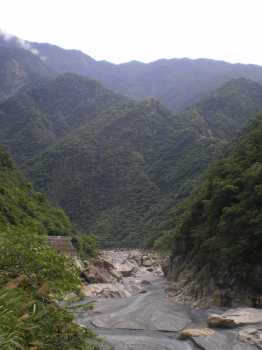
I would recommend Woody Guesthouse for those looking to spend a second night or coming in from Daju. Its located near Sean’s guesthouse towards the far side of the park for those coming in from Qiaotou, about an hour and a half from Tina’s and Middle Leaping Gorge, which I also strongly recommend. The views from the bottom of the gorge are incredible!

The owner is very friendly, speaks English well and the food was excellent.

Monday, May 25, 2009

Interpreting Chinese Youth Sub-culture as a Haughty Expat

Like many foreigners in China, I find myself spending a lot of time observing and interpreting Chinese culture, particularly its modern youth culture. A lot of the time, I find myself fighting the urge to be haughty and snobby, looking down upon whatever Western food attempt, miscued Chinglish effort, local rock band, modern art display and other examples of contemporary Chinese art and culture through my ‘oh-so-cultured’ Western eyes.

I can almost see the online video about disrespectful Overseas Chinese, where the ungrateful ABC walks around some upscale display condominium, pointing out the inauthentic, "knock-off Western" paintings or a particularly poorly matched choice in bedroom furniture. It's bi-polar in the unique way that being an expat in China so often is, because I feel like I spend a lot of time defending China from the ignorant, outsider opinions of people who write off China without having stepped a foot inside it, do not speak the language, and know nothing of the country beyond Western media coverage. My relationship with China is not so much "love/hate" as it is "defend/critique."

In coming to China, it is easy to look upon a lot of contemporary Chinese culture, particularly that of the yuppie/nouveau riche classes, as tacky, kitschy, derivative and naive, to look upon its interpretation of modernity as simply a sloppy attempt to imitate the developed West. And then, as does happen so often during conversations about this topic, expats (like myself) will bring up the Cultural Revolution, China's rocky past and how amazing it is simply for any of this to exist at all. We’ll continue that though contemporary China may be a long way from Tokyo and even further from London or Milan, it's still a whole lot closer than it was 30 years ago.

I came to Chengdu having heard of a nascent art scene, and was quite sorely disappointed to see just how undeveloped and small it really is. Newspapers frequently run articles discussing how hot Chinese art is in the market these days, yet sadly, when I visited the art warehouse district in Shanghai, I found that the art I saw there which struck me as most original was made by foreigners. Having come interested in discovering youth sub-culture and rebellion, I’ve found that too much of it appears to consist of kids in tight jeans and Chuck Taylors who listen to Panic at the Disco, the more enterprising of them perhaps starting a band that sounds almost identical.

That's not to say that this doesn't happen in the West: it does, in great amounts. But I suppose that's just the point: I'd come to China looking for something different--"Williamsburg-in-Shanghai", but unique in a Tokyo-ish way, was my naïve ideal. And where it is indeed very different, so much of what is deemed contemporary and young here seems directly imported, or bastardized in interpretation, straight from the West. Whether it's young couples eating a “romantic meal” in McDonalds on Christmas, college students imitating Kobe on the basketball court or middle-class kids at a punk show, much of it feels completely lacking in Chinese characteristics. It feels hollow, inauthentic, and lacking the sort of localized, independent adaptation that made rock and roll, punk and the Weather Underground so, well...cool.

In talking to a fellow foreigner about it, we noticed that so many of our young Chinese friends--all intelligent, open-minded and capable--were so devoted to going to America for college and fortune, that perhaps it left little opportunity to concern themselves with developing local culture and art. Most of them study hard sciences, not the humanities, and in their spare time they don't seek out "Carsick Cars" or the latest hip indie band, they practice their English through "Desperate Housewives." The most Chinese cultural activity I can point to is that some of them write Tang style poetry for themselves. Others take an interest in Tibet, minority culture and Buddhism. But even such an interest I've read comes originally from "Shangri-La chic" becoming fashionable first in the West, then being re-adopted by Chinese hipsters via Western media.

When you live in a society thrusting itself head-first towards a vision of development that is so culturally intertwined with being Western, and when so many of the best and brightest spend all their energy competing to get into MIT, it leaves little energy for subculture. My friend suggested that perhaps in a generation or two, the children of a more-established middle class will be more interested in the humanities, art and such things often considered non or less-monetary in nature. Perhaps that will be the case, though given the competitiveness of modern China, I wonder whether even future generations will be willing to take their eyes off the cash prize for long enough.

At this point, I suppose it's just too early to expect much of what the “cool kids” and their subcultures here to have developed its own characteristics. Having only recently gained access to Western media and lifestyles, many Chinese are in a ‘honeymoon’ phase in terms of their relationship with the West, possessing an idealized vision of societies of universal abundance and comfort. In reading Zachary Mexico's enlightening "China Underground," I was struck at how of all the counter-cultural youth he met, few of them seemed to be doing much that I would deem "innovative" or "unique." Whether this is partly due to Confucian, conformist education or other similar “uncreative Chinese” arguments is another argument altogether.

Eventually, when I go out seeking culture that feels sufficiently "Chinese," I find it amongst the elderly, and often enough, in parks: writing calligraphy with water brushes, singing local opera and playing Chinese chess or mahjong. I study kung fu at the local sports university, and though I occasionally do see some kung fu majors practicing, it's more likely that I will see track and field athletes taking a recreational tae kwon doe class. Chinese youth culture, to caricaturize, is more about Warcraft, NBA and KTV than anything uniquely local or particularly different, at least to Western eyes. That's not Chinese youth’s loss at all—rather, it's mine, as a foreign observer seeking out something that this country’s young people are not at all obliged to provide.

One China blogger at the site Lost Laowai has pointed out that more Chinese youth appear to be rebelling through fashion, a sort of baby step towards deeper forms of rebellion, borne of critical thought, dissent and creative communities. I can only hope this is true, but would imagine that such youth fashion circles are, in their own way, as conformist and imitative as mass culture, though admittedly within a much smaller community.

That's not to say there isn't creative, interesting stuff going on here, nor that I'm even aware of all of it. This is, naturally, just one non-expert perspective by a foreigner. Wonderful online platforms like neocha.com expose us to non-mainstream music and creativity that were previously unknown, and I occasionally do meet or hear about locals doing exciting work. But my point is that largely, in my (albeit limited) time here, I haven't seen much noteworthy "contemporary Chinese culture" to date.

Links:

Idealized images of Westerners:
http://www.chinasmack.com/stories/china-does-not-have-any-men-suitable-for-me/

One of the best Chinese bands I’ve heard: http://www.myspace.com/rebuildingtherightsofstatues