Search This Blog

Sunday, September 27, 2026

On Gallipoli, Micro-Museums, and Syrian Sweets

 “A little higher,” I told Diyar, as he delicately pushed the noose around the window latch with a long rod.

The noose was made from the waist belt of my fanny pack, and the rod was a branch of the thorny tree by the window.


A little while earlier that morning, I had locked myself out of my hotel room in the small town of Selcuk, Southwestern Turkey, by, well, locking the door. The night prior, Diyar had explained that my room door was broken and had shown me the temporary way to close and open it. But the nuances were not passed along, including the important fact that locking the door meant it couldn’t be opened without a locksmith. 


It was 8:30am. My belongings were trapped in the room and my guided tour to the ancient Roman city of Ephesus was scheduled to pick me up at 9. I called Diyar, obviously waking him up, and he soon emerged from the office/staff bedroom, sleepy in his shorts and sandals. 


“Did you open your windows?” he asked me.


I had in fact, the night prior, which we hoped now might work in our favor, given my room was on the ground floor, facing the road. But after about ten minutes of struggling with his jerry-rigged window break-in effort (and some suspicious looks from people driving by), I decided to call it quits.


"Don't worry about it, Diyar. I'll be OK." He looked relieved.

"We'll get the locksmith to open it by the time you get back from your tour!"


It all worked out anyway. I found a nearby grocery store where I bought a cap and sunscreen (Ephesus still gets into the high 80s in September), and my tour bus picked me up from the store.  Before long, I was visiting the House of the Virgin Mary and walking along Ephesus’ famous Main Street toward the Library of Celcus. When I returned to my room from the tour later that evening, the door was working again.


That evening, my colleague Hamza who has a summer house nearby picked me up and took me out to the charming town of Sirince. He and his wife had bought their place within two weeks of hatching the idea during New Years 2020, as a COVID getaway from Istanbul, about five hours drive away.


“It took me two years to plan this trip,” I told him, impressed by their decisiveness. “I would have spent years over-analyzing before making a decision like that!”


“It was COVID,” Hamza explained. “Everyone’s perspective was different back then.”


I’m glad it did, because conversations with Turkish colleagues and old classmates made my two weeks in Turkey infinitely richer and more meaningful. Instead of just bouncing my endless questions off AI—“Can Turks protest their government freely?”, “How do you pronounce 'ü’ versus 'u'?”—I had actual Turks to ask! And, perhaps because of my Chinese-Malaysian heritage and Australian-American dual citizenship, we found something relatable.


“We’re in between,” they would tell me. Between Europe and Asia, the Russia and Ukraine conflict, the US and China, secularism and Islam, dictatorship and democracy, peace with the Kurds and talk of war with Israel. And because it’s 2026, they found Trump enabling the worst behaviors in Erdogan and his administration. As in: “If America is doing this level of open corruption and sycophancy, then obviously it’s OK for Turkey to do it. In fact, we’re allowed to do it even more!”


As depressing as contemporary political conversations were, being in such an ancient land—with all its empires and coups and drama over the years—lends a certain philosophical remove. Or perhaps it’s just middle age. I also sensed a lot of pride and resilience amongst the people in Turkey.


--

My interest in visiting Turkey was kicked off at 19 when an Aussie backpacker showed me pictures of the Cappadoccian landscape. 23 years later I finally made it to this stunning, otherworldly land of “fairy chimneys”. From what I could tell, it’s gotten huge in Asia, where most of my fellow tourists seemed to hail from. I would see the same faces as we did the sites, waking early for a hot air balloon ride, wandering 11th century cave churches or ingenious underground cities carved eight levels down into the soft volcanic rock surface.


It’s somewhat fitting that an Australian spurred my interest in visiting Cappadocia, given that as a boy, like every Australian, I was introduced to Turkey in a very different context: the tragic Gallipoli battle during World War I, which focused more on the stupid decisions of upper class English generals to send thousands of young ANZAC soldiers to their deaths in brutal trench warfare than the Turkish enemy combatants who killed them. At least that was the narrative we were taught in school. At dinner in Istanbul with a Turkish colleague, I learned that she’s from Gallipoli, and sadly lost both great-grandfathers to the battle. She told me Australians are seen as victims of the British and French Allied ambitions. I learned that Gallipoli played a seminal role in the formation of both Australian and Turkish national identity: for Australia it helped us establish key character templates: larrikin irreverence toward authority, mateship, egalitarianism, endurance. For Turkey, its role was even more directly important: its victory as the Ottoman Empire and the military general Mustafa Kemal’s leadership (he would go on to win Turkey's war for independence and later be renamed Ataturk, “Father of Turkey”) was the first step toward Turkish independence from foreign dominance and the establishment of today’s Turkish Republic.


But beyond having to write a school essay about ANZAC bravery in Gallipoli, I knew very little about Turkey before going on this trip. It had always been something like a missing piece in my mental map of the world. To help fill that knowledge gap and enrich my trip, I borrowed way too many Turkey-related books from the library in the months before my trip: travel guides, histories of Istanbul, and various recommended novels. Admittedly, I barely opened most of them. But two books in particular greatly enriched my understanding of Turkish culture and politics: the love story Museum of Innocence by Orhan Pamuk, and From Life Itself by Suzy Hansen, a narrative nonfiction book about an Istanbul neighborhood in the Erdogan era.


The Museum of Innocence was adapted into a TV series that was released on Netflix earlier this year. I found its alluring portrait of 1970s Istanbul society as well as the chemistry between its beautiful lead actors an easy way into learning about Turkish sexual and class mores. It’s told from the perspective of Kemal, a 30-year-old wealthy businessman. He’s about to get engaged in Istanbul’s society wedding event of the year when he falls in love with Füsun, his beautiful 18-year-old poorer distant cousin, with whom he begins a passionate love affair. He also begins collecting her belongings, which he eventually displays in a museum - the real-life Museum of Innocence. If it sounds creepy, that’s because it is. Pamuk wrote the novel alongside the creation of the museum: collecting hundreds of items that “belonged” to his novel’s characters. As someone who loves both novels and museums, I enjoyed visiting a museum focused on the individual human scale, in a semi-autobiographical way, even down to particular streets of the Nişantaşı neighborhood and advertisements on matchboxes. ChatGPT helped me understand various local reactions to the work: reactions have ranged from sympathetic to outright disdain, suggesting a similar generational feminist evolution in Turkey as we’ve had in the west, versus traditional notions of romantic love as long held yearning, more akin to Kemal’s obsessive devotion. The museum is located in Çukurcuma, a hip neighborhood full of cool boutiques and vintage stores, that make it a fun place to wander around after visiting. (If you go, make sure to bring a physical copy of the book, which grants you free entry.)


From Life Itself offers a much more contemporary and explicitly political perspective on modern Turkey, but like the Museum of Innocence, shares a similar attention to detail in its vivid character descriptions. These characters, however, are all real individuals, most of whom own stores on Professor Naci Şensoy Avenue in the working class neighborhood of Karagümrük, about thirty minutes by bus west of the Museum of Innocence. The author, Suzy Hansen, is an American journalist who lived in Istanbul for many years. Initially curious about the influx of Syrian business owners into the presumably hostile area, she ended up spending almost ten years hanging out with its residents, from around 2015 to 2024, getting to know them, their politics and their relations with each other. When El Nour, a sweets shop owned by a Syrian war refugee named Majed was attacked by Turkish thugs, Hansen initially thought it was due to nativist racism. Her realization that it wasn’t, and that working class Turks can say ignorant, racist things about Syrians while being incredibly kind, generous and protective of their Syrian neighbors, reminded me of the people in most of the communities I’ve lived in. Her book is wonderfully insightful, moving and well-written. It deepened my understanding of Erdogan and Turkish politics and society beyond the overly simplistic left-right, secular-religious dyad we’re commonly exposed to.


On my last day before flying home, I caught the bus to Karagümrük. As soon as I got on the bus, I noticed that most of the women wore black chadors instead of hijabs, a more conservative Muslim dress. Just as Hansen described it, Karagümrük was crowded and gritty, another world compared to the glittering touristy neighborhoods I had been spending my time in. I slowly made my way to Al Noor, the sweets shop at the heart of the book. When I arrived, I was the only customer. 


As had been my custom in Turkey, I pulled out my phone and used Google Translate to ask in Turkish: “Do you have an English menu?”


“No Turkish. Arabic.” they responded, and I changed the language. The wonders of modern technology!


Having seen my question, the man who I guessed was Majed gestured for me to just come around the back and look at their oven and ingredients. There were a number of young workers–presumably his sons–beavering away making pizzas and baklava. “One chicken pizza,” I wrote out.


Satisfied, I sat down, and a small plate of sweets were brought out as a gift for me. Here was my chance to reveal the true purpose of my visit. Again, google translate came in clutch:


“Excuse me sir: Are you Majed? I am an American visiting Turkey. I read a book by the journalist Suzy Hansen and she wrote about this store.”


I showed my phone to the man and he read the Arabic translation. He smiled and nodded. A moment later he brought me a bottle of water, presumably another gift, then went outside.


A few minutes later he came back with a friend, who I realized was his English translator. 


“We’re honored to have you visit us,” his friend translated for him. “We’re happy you read about us in Suzy’s book.”


We took some photos together and I sent them to Majed on WhatsApp.  After I finished my pizza, I decided I wanted to say something that was on my heart.


“I found your story very inspiring, especially how brave you and your sons are. I hope to be as good a father to my son as you are. I also hope Turks become more tolerant and kinder to Syrians, like some of your neighbors here in Karagumruk.”


I showed him my screensaver, with my picture of my three year old son, with his unicorn face paint.


Majed read my message. He began to tear up. “Inshallah,” he said, putting his hand on my back. “God willing.”


–

Later that evening, I was eating cağ kebabı, a delicious horizontal spit lamb dish. The restaurant was crowded and I found myself sitting next to a family speaking German. We struck up a conversation. It turned out that Mohammed and his family were visiting from Hamburg. Though born and raised in Germany, he only had a Turkish passport.


“Germany has been good to us,” Mohammed and wife, who is of Russian heritage, told me, “but Germans constantly signal to us that they will never accept us as one of them.”


He nodded toward his mother, who sat on the other side of him, and wore a hijab.  “For example, my mother moved to Germany when she was six. She speaks perfect German. But every time we cross the border to go back, the border agents will make a big deal. They’ll ask ‘Why do you speak such good German?’” 


We discussed how different this is to the United States, a country I moved to when I was 16, and yet I feel as proudly American as someone who has been there for hundreds of years, regardless of blood. I felt grateful to live in a country where I can fully belong, and not be seen as some permanent foreigner. I asked Mohammed about Turkey: could he see Turkey ever becoming a multicultural country like the US? While its constitution protects the rights of non-Turks and Muslims - the country’s identity struck me as still closely aligned to its Turkish ethnic heritage, and–particularly in the Erdogan age–to Islam.


“No way!” Mohammed was adamant. “Turks have a very strong ethnic identity. That’s why nobody wants to fight a war against Turkey. We’re very nationalistic. If you start a war with us, every Turk will come back and fight for the country.”


Sunday, February 9, 2025

An Ode to Peter Hessler: My Favorite China Writer


I first became serious about moving to China shortly after college. I was living in DC, working an entry level job at an international development NGO in Silver Spring, Maryland. I began reading books about the country during my subway commutes. My favorite book that I read during this period was River Town by Peter Hessler, which helped spark my interest and excitement about making the move, with its vivid descriptions of the people and landscapes of Fuling, the small Sichuanese city where Hessler had taught English as a Peace Corp volunteer in the mid-90s. I immediately became a dedicated fan of his articles on China in the New Yorker, with their blend of wry humor, insight and humanity.


When I moved to Chengdu as an English teacher in 2007, I learned that I was far from the only fan of Hessler's writing. I discovered that for many of us, River Town was a seminal text, our generational call to adventure in an intriguing country, rapidly transforming while retaining its uniqueness. My friends and I would reference Hessler constantly, speculating on how good his Mandarin is compared to Dashan, a tall white guy from Canada who is famous in China for his fluent Mandarin and performing xiangsheng (traditional comedic theater).


Hessler shaped my conception of who I was and could be. I yearned to follow in his footsteps, wandering grimy streets and eating cheap noodles in alleyways with the locals, then writing beautiful, erudite essays which enlightened the masses and improved understanding between China and the rest of the world. He is an intellectual who wears his elite education lightly, appearing  more at home talking to the common man than some high ranking politician or business executive. Moreover, as far as white guy experts on China go, he strikes an expert balance between demonstrating his deep appreciation and fondness for the country with a measured critique of its flaws. He will reference bad ‘Chinglish’ or other opportunities for easy laughs. But such moments are always outweighed by the deep empathy and understanding he offers toward  the various Chinese individuals he writes about.


Although I didn’t end up achieving my original dream—to become the New Yorker’s China correspondent and write deep, insightful articles and books that helped explain the country—Hessler’s books have inspired me throughout my life. I read Oracle Bones, his second book, which he wrote while based in Beijing, in between teaching classes at elementary and middle schools in Chengdu. I recall my giddy excitement when a friend lent me Hessler’s third book, Country Driving, shortly after it was published in 2010. I had moved to Beijing the year prior, and had begun writing the nightlife column for the Beijing City Weekend, a weekly expat rag.  That was as close as I would get to emulating Hessler though, and I ended up spending most of my time writing grant proposals for the Chinese branch of Junior Achievement, an American education NGO. 


Not long afterward, in early 2011, I giddily rode my electric scooter from my office in Dongsishitiao to the Beijing Bookworm in Sanlitun to see Hessler speak during the bookstore’s annual literary festival. It felt special, being in that room full of fellow Hessler acolytes, as he read from his new book and addressed our questions. Xi Jinping had not yet come to power, and China’s relations with the West were still relatively warm. It was a period of widespread optimism and increased integration, and. Beijing was an intoxicating playground for ambitious 20-something westerners. All around me, my fellow 20-something Westerner friends were doing Fulbrights or study abroad semesters, working their way into elite institutions, even starting companies or art galleries, many with Hessler-shaped dreams. Most of our Chinese friends had studied or spent time in the West, and we were increasingly fluent in one another’s language and culture. Driving past the gleaming skyscrapers of Guomao en route to Sanlitun for a night out, I felt like I was at the center of a promising new 21st century.


By comparison, Durham, tucked away in North Carolina, felt so small and remote. I had returned to the United States to pursue a more practical career via an MBA at Duke University. By that time, Hessler had moved to Cairo, and while I missed his China insights, it was exciting to read along as he found his footing covering a radically different culture. However, perhaps because I’m a Sinophile and not an Egyptophile, his writing on Egypt never captured my imagination quite the same way. Which is why I was so excited to learn in 2020 that Hessler had returned not only to China, but to my beloved Chengdu. Even better, he was teaching at Sichuan University, the same place that I had studied Mandarin back in 2009. Indeed, I learned of his latest book, Other Rivers, at a live recording of Kaiser Kuo’s Sinica podcast with Hessler at Duke, where I got him to sign a book for my father, a dedicated Chinese nationalist.


I read Other Rivers in the moments while my toddler slept, enjoying Hessler’s familiar mix of humor, insight and empathy. I’m now at a very different stage of life than when I first read River Town, my China expat dreams long since faded. The book brought me back to my time in Chengdu, when life felt hopeful, exciting and unwritten. Reading about his students’ lives–both past and more recent–made me wonder how the various Chinese friends I made are doing now. The hardening of China-Western relations and increased tensions is disheartening, but I was recently gladdened to hear that young Chinese and Americans were having some more open dialogue on the Xiaohongshu app after the recent US TikTok ban. I hope Hessler will return to China in the future, perhaps when the political climate has improved, to continue enlightening us about this fascinating, compelling country.

Tuesday, December 20, 2011

FniIC profile X: The Entrepreneur - Pan of Hangzhou

NB: This is being posted for the benefit of the profiled Couchsurfing host, Pan. I'm not sure whether it was posted earlier, but if it was, it has since disappeared. So, here it is again!

--


I. The Entrepreneur

Pan is 25 but looks about 19. We met through Couchsurfing: I was heading to Hangzhou, looking to finally see the famed city's sights following a business trip to Shanghai and was looking to meet some interesting locals. While his profile featured very little personal information, he'd received dozens of positive references from other travelers that he's hosted, and so I trusted that he'd be a good host. His apartment is the epitome of sprawling post-collegiate XX: a gun (a traditional Chinese harp) lay on the living room table, covered by various debris; the kitchen table was amassed with books on Chinese e-commerce and bakery price tags; empty drink bottles were scattered like fallen soldiers.

I asked him what he does for a living and received a mumbled answer that involved selling clothing on Taobao, China's eBay, which is going through an incredible period of growth. I thought he said something (we spoke in Chinese, so it occasionally became unclear) about how he didn't have to work, because his parents provided financial support, and so received the impression that he was some sort of pampered single son, a product of the One Child policy. How wrong I turned out to be!

Pan began to open up at a Mexican bar that night which is run by an American who has lived in China for 16 years. This bar owner used to be my boss - I wrote food reviews for the Chengdu branch of his small English-language listings magazine business - and when I showed Pan the magazine, he burst into a long and highly rigorous analysis of the listings magazine market: costs, revenue streams, target audience. His mind is constantly analyzing ways to make money - a classic entrepreneur in a region famous for its business savvy - and he explained that his parents travel around the country constantly, trading in the fish market. He explained that he is opening a bakery next month, partly because he doesn't get along with his partner at the bakery which he currently manages.

As he flicked through another magazine, he peered at an English advertisement for the University of Nottingham in the UK.

“So you can read English magazines pretty well?” I asked him. When I'd asked how his English was, he'd responded instantly: “Not as good as your Chinese!”

“Yeah,” he replied casually: “I was just checking because I studied there…”

“Huh?! You used to live in England? Your English must be great!” I responded.

Thus began his free-flowing tale that unfurled like a handkerchief from a magician's sleeve, each turn becoming increasingly fantastical. Pan, though born in Hangzhou, has lived in over a dozen cities across China, largely due to his parents' work. He researched lilies for his bachelor's degree in biology, before moving to London to study art. Receiving less support from his parents, and having failed as a street-side guqin busker (the humor in such an effort lies in that the gun is, by its nature, a very quiet instrument traditionally played in solitude), Pan moved to Nottingham, completing a master's degree in food processing management. When I asked how he found it, he was honest.

“Incredibly boring,” he said. On the topic of English cuisine, he said he found it “frightful”, instead cooking huge Chinese feasts for his Western friends.

While a lot of young 'boomerang Chinese' - those who've studied in the West and returned to thrive in China's job market - often advertise their worldliness and Western savvy, Pan is the opposite. He dresses in simple, local brand clothing, he prefers to speak Chinese to English, and when asked about the differences between English and Chinese people, he told me that “they're basically the same.” I'm not sure how many English (or Chinese) would agree with his verdict, but such is his outlook.

After three years in the UK, Pan returned to China, where he has since started his flourishing wholesale market on Taobao, managed the bakery that he co-founded and worked as a Latin dance coach. The latin dance coaching caught me by surprise, but I gradually began to predict his response, whenever I asked why he started some seemingly random new hobby or venture.

“I was bored,” he would inevitably say. Bored of the piano, he learned the guqin. Bored in college, he became a trained Chinese masseuse and acupuncturist. Bored after returning to China, he took latin dance, won a championship and became a teacher. His interest piqued by the economic crisis, he is now completing a masters with Fudan University (one of the country's most famous), in economics. He rarely finds time to go to class, but seems to do OK. The next day after our bar conversation, he took a series of exams that began at 9:00 am and finished at 6:00 pm, working his way through one-and-a-half pens' worth of ink in the process.

“Have you ever considered just finding an office job at a multi-national?” I asked him at one point.

“There's not so many of those jobs,” he replied. “Besides, by starting my own company I can provide more jobs for other young Chinese, and give back to society.” Earlier, Pan had explained that the reason he came straight back to China, instead of lingering post-degree in England and building his savings, was that “the Motherland needs my help.” Such altruism though comes muted by a very honest sense of realism. When I ask if his entrepreneurialism is driven more by a desire to cure youth unemployment than simply to make money, he instantly quashes any such idealism.

“Of course my main goal is to make money for myself!” he acknowledges. “You've got to have 'made it' yourself before you can worry about helping others.”

Pan wants to go traveling for a year, and is interested in moving to the US, because “there are many things about the government here that I find annoying.” But he wants to have his businesses up and self-managing before he leaves. On the issue of marriage, he expresses interest in marrying a foreign woman, because “mixed children have better genetic make-up” and he is cynical on the notion of lifelong marriage. I also imagine that, given his freewheeling, omni-committed, city-hopping lifestyle, a lot of more traditional Chinese women would find Pan tough to keep up.

His house, when his parents aren't visiting, is a roundabout of Western and Chinese guests, and when I get back late on the second evening, he's hosting an American college student and his local friend. When we pressure him to perform the guqin for us, he easily relents, and his fingers slide and leap along the wooden instrument elegantly. He gives us a boyish, effete smile as we applaud: “But be warned,” he tells us, “playing the guqin is a deeply emotional experience. And all of the songs are so sad!”

Sunday, July 24, 2011

Goodbye from FNiC


In July 2011, almost four years after moving to China, I returned to the United States to undertake an MBA at Duke University. As I’ve left China (for now), I don’t plan on updating FNiC any longer. For those of you who are interested in following my journey there, I plan on keeping an occasional blog: markhiew.blogspot.com. Through this blog, focused largely on business school, social enterprise and other related affairs, I plan on describing some of the challenges that non-profiteer/social sector folks like myself adjusting to the new world of business.

I started the “Flatnose in China” blog/email series in August 2007, as a young Australian/American-Chinese man about to embark on his first visit to China. Over the years, the blog has been an enjoyable way to share my experiences and thoughts with you, my loyal reader, as I went about the complex task of simultaneously ‘discovering my roots’ and ‘understanding China’ (to say nothing of broader existential struggles like finding a career path and breaking down cross-cultural barriers.)

My stint in China was, like for many other foreigners, an incredibly varied experience, with numerous moments in which I felt utterly intoxicated with the place, and equally many in which I longed to escape it. Among the things I will miss most:

- The food: It bears repeating that Chinese cuisine is not simply the gluggy, battered, “General Tso’s Chicken” Western-Chinese cuisine that one associates with paper take-out boxes and Kikkoman sauce. It is infinitely better. I will miss the diversity of flavors and ingredients and regional variations so readily available in Beijing, and which I have grown so fond of in my time there. In particular, I will miss the cuisines of the southwest, from Sichuan, Guizhou and Yunnan, and their fiery, delicate brilliance, as well as Chinese-Muslim cuisine, particularly that from the local Xinjiang restaurant across from my old office.


- The friendliness: Chinese people are, on the whole, very friendly to foreigners. They may not be the most subtle or well-informed on occasion, but they have shown great generosity, openness and curiosity to my foreign friends and me during my time there. One of my favorite memories of China is of long train rides, during which colorful conversations with strangers would unfold, giving me wonderful insights into the lives of locals from all walks of life (as well as much-needed Mandarin practice!).


- The freedom: This last one might seem counter-intuitive, but in many ways, life in China is a lot freer than that in America. Not in obvious terms, but more in terms of daily life. There is a lack of regulation which, while at times maddening (see: traffic), can feel really liberating, such as the first time one walks down the street drinking from a beer bottle (Americans always get a kick out of that, even though Chinese don’t actually do it themselves). As a young expat in China, one is also freed from the constraints one would normally have to tolerate back home (mortgages, family obligations, general society) while remaining outside the pressures that local Chinese face, as well as enjoying a standard of living far higher than that afforded in the West (endless meals out, affordable taxis, maids, etc.). It’s why some of my foreign friends are staying put in China: they’ve got good jobs, and they’re living the good life!


While I’m not trying to get into a long political rant here, I’ll mention a point that I made both at my work and personal farewell parties: In recent times, I’ve noticed a steady increase in insecure nationalism in both China and the US. Anti-China rhetoric continues to win cheap voter support for American politicians, and the country makes for a convenient ‘enemy’ figure in people’s own political narratives. At the same time, thin-skinned angry fenqing and Chinese exceptionalism (the notion that “China is different” and that foreigners “cannot understand China”) remain the standard in China.

If anything, my four years in China have shown that these caricatures of the other side are inaccurate and unnecessary. I’ve acquired a collection of Chinese and foreign friends who are actively helping to break down these artificial barriers and forge greater understanding between these two critical nations: indeed, between China and the West at large. While indeed very different, it is possible for Westerners to understand China (Peter Hessler is my favorite example) and it is possible, if not politically convenient, for US elected officials to demonstrate a more nuanced perspective toward US-China trade relations.

Hopping off of the soapbox, I’ll end by nothing that I will certainly be returning to China in the future, and am interested in finding ways to support mutually beneficial, sustainable growth between China and other countries.

Thanks for reading,
-Mark

Monday, July 4, 2011

Taiwan travails


Four years ago, not long before moving to China, I had a brief conversation with a fellow AIDS activist from Kansas.

“Don’t call me ‘Chinese!’” she barked suddenly. “I’m TAIWANESE.”

Unfamiliar as I was in the semantic delicacies of the anti-mainland Taiwanese diaspora, I apologized immediately. It reminded me of the tongue-twisted embarrassment I felt talking to a classmate after I’d just arrived in America, and was still acclimatizing to its racial complexity.

“Is that common amongst Black…I mean, Afro-American…I mean, African-American…” I stammered.

“Just say ‘Black’, man!” my friend interjected, mercifully.

Having finally made it out to Taiwan, I found myself trying to remain sensitive to wording in conversations with locals. Cross-strait relations are an obvious point of discussion, and thankfully, I was able to use the term “mainland” to distinguish between the two groupings. But in contrast to my Taiwanese-American Kansan friend, locals displayed no anger or militancy towards mainland China. Snobbishness is standard—mainlanders are commonly referred to as ‘uncultured’ or ‘barbaric’—though such sentiments are carefully tempered by a more open-minded younger generation. Curiosity is widespread. But by far the most common sentiment I’ve noticed is one of pragmatism.


“I heard Citi just opened up a hundred new positions in the mainland,” Tobias, a local Taiwanese who works for the German insurance firm Allianz, told me. He studied in Germany and speaks the language fluently. “But they hardly have any openings in Taipei.” This exemplified, he told me, the trend amongst multinationals to ignore Taiwan in their obsessive rush to get a piece of the mainland market. I asked if he was frustrated by the situation.

“Of course,” he said, with deep resignation. “We don’t have the English colonial influence of Singapore and Hong Kong, so we can’t compete with them. Basically, it’s hard to get a job with a foreign company here.” He said he was open to moving to Beijing or Shanghai in the future. When I asked if his parents would have any political reservation, he shook his head.

“Before, when China was still ‘communist’, they probably wouldn’t like me to go. But now that it’s opened up, they’d be fine with it.”

It was all so far removed from the narrative of my university international relations courses, where American classmates would go on Cold War-era diatribes about America’s role in protecting freedom and democracy in Taiwan. One classmate, who was in the armed services, talked of how she “just can’t understand how the world can accept Communist rule over China.” At the time, although I’d never been to the region, I had bristled with abstracted Chinese indignation—although my parents were born in Malaysia, I’d been raised to believe that China remained the country of my family’s roots. The brash arrogance of my classmate back then—pre-financial crisis, extended wars and long-term recession—now feels like a distant memory, drawn from those final days of cavalier American invincibility.

Starting from June 28th this year, Mainland Chinese tourists are being allowed to visit Taiwan independently (previously they could only come with tour groups). Local newspapers run stories on night market vendors and holiday spot hotels that are busily negotiating special deals to lure mainland tourist business. According to a friend, the Taiwan government issued a helpful set of guidelines for mainland visitors to Taiwan.’ Top of the list was: “Do not shout ‘Long Live Chairman Mao!’ in public.”

I think a far more appropriate point would have been: “line up” or “stop at red lights.” Such concepts, while they exist on the mainland, are still not regularly followed. For example, in Beijing, subway riders look upon transport etiquette guidelines the way that many motorists regard speed limits: while technically you’re supposed to line up and allow others to get off before boarding a subway train, common practice holds that one must rugby scrum for a seat as soon as the doors open. I’ve seen riders attempting to disembark from the train get literally thrown back into the carriage by a tidal wave of ferocious seat chasers. For all the government’s efforts to promote civility, such behavior exemplifies how much still hasn’t changed in China: intense competition over scarce resources, a tribal take-care-of-your-own mentality, the constant need to budge as far forward as one can go (metaphorically and literally).

Taiwan is different. Like Hong Kong, people line up. They stop at red lights. They say “sorry” in public. One friend described Taiwan as somewhere in between China and Japan in terms of culture, and though I’ve never been to the latter, the analogy seems accurate (Taiwan was ruled by the Japanese from 1895 to 1945.) Coming from the intense struggle that daily life in Beijing evokes, this past week in Taiwan felt refreshingly easy. Services are plentiful and convenient. There are less people to compete with, and going through one’s day is smoother, cleaner and, in many ways, far more pleasant than in the mainland. People even speak more English.


Coming to Taiwan after four years spent on the mainland has given me the chance to see the country from the other side of the fence. It leads one to wonder, as many must do, what the mainland would have been like if the Nationalists had won. Would they have been able to perform the same economic ‘miracle’ with a population some seventy times larger than Taiwans? Would its sovereignty have been undermined by excessive Western influence, as the CPC claims? How well would these well-established tech and manufacturing companies, like Acer, HTC and Giant bicycles, do at the mainland’s national scale?

Such questions are, of course, in this age of growing Chinese power, merely academic. But I can easily see how Beijing and Shanghai may in the future come to more closely resemble Taipei, in terms of civility and the efficient, urbane culture of its citizens. As economic and tourist ties grow between China and Taiwan, Taiwan’s already heavy cultural influence over the mainland’s younger generation will only grow.

But in the mean time, I enjoyed the friendliness of local Taiwanese and their island’s myriad pleasures. Known as a foodie’s paradise, their xiao chi offerings lived up to my judicious expectations, and then some. Snacking my way through town on local delicacies ranging from crunchy, salty xian doujiang - a typical breakfast broth, to fresh oyster pancakes in the coastal city of Tainan and night market rice sausages, I would have gained another belt inch, but for all of the walking I did in between. And to counteract the humid heat, their ‘snow flake’ ice dessert stands—think Italian ice but served in powder soft layers with flavors like mocha, peanut and passionfruit—are the closest thing to dessert heaven that I have ever come.


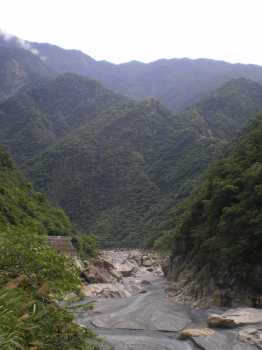
In Taipei, I discussed philosophy with a local TED talk discussion group, courtesy of my couchsurfing host, and traversed its national palace museum and Taipei 101. And in Taroko Gorge National Park, I zipped through winding tunnels, carved into the mountainside, opening up into stunning vistas of towering white marble walls and crystal azure water. For such a small, politically complex island, Taiwan offered a stimulating mixture of current affairs relevancy, sensory delight and natural beauty that makes for a well-rounded holiday, and a population that is savvy, capable and deeply accommodating to visitors. I hope it never loses that charm.

Sunday, February 13, 2011

On Freedom, In Borneo


Picture courtesy of Joanne Cotterill of Borneo Dream

I recently read Jonathen Franzen’s wonderful novel, “Freedom”, and this past week in Malaysia has given me the chance to reflect a little more on the notion. I gleaned from the book Franzen’s efforts to demonstrate the limitations of positive freedom (‘freedom to…’ as opposed to ‘freedom from…’ as John Rawls wrote), a prescient reminder in today’s world of short-sighted libertarianism and self-branding.

I spent the past week in Malaysian Borneo split between time with extended family and taking a diving course while staying at a youth hostel. It felt a little awkward, jumping from personal vacation mode to the traditional responsibility of seeing relatives, but I’m glad I did it—I would have felt guilty spending the entire time holidaying and too obligation-laden amongst relatives with whom a sizable cultural divide exists. Also, splitting time made clear the striking contrast between two worlds that exist here: that of exotic expatriates and that of more grounded locals.

For most backpackers in Borneo, Sabah’s attractions have little to do with its people. For the most part, foreigners flock to its world-class dive sites, where sea turtles and colorful fish flourish amongst the warm waters and picturesque islands of Sipadang. Inland, the other major activities involve ascending the region’s tallest peak, Mount Kinabalu, or trekking through its renowned rainforest jungle. If there is to be a human interest, it’s in visiting native tribes deep in this jungle, whose head-hunting, blow dart-shooting evokes an untamed romance.

Staying at a local hostel, I enjoyed the free-flowing range of topics that make up standard Southeast Asian backpacker discussion: transcendental drug trips, exotic festivals and burial practices amongst remote minorities, Thai sex show tricks. One new American friend, an engineer who’s lay-off led to an ongoing two-year sojourn, shared insights into a copper mine in Cameroon that he invested in, after studying the data provided by an ex-stunt motocross mohawked punk rocker that he played poker against in Vietnam. With a Swiss teacher for deaf students, replete with dreadlocks and multi-hued baggie hippie pants, I discussed matters of sign language grammar and cross-dialect intelligibility. I loved every minute of it, precisely because I know I’d never have met these individuals in my normal circles and simply because it tuned me onto altogether new matters: I think good vacations, along with being relaxing, rejuvenate the mind so.

During my dive course, I enjoyed the experience of being surrounded by a tight-knit school of fish, hundreds-large, and simply interacting with an utterly foreign, startlingly intricate world. Sitting aboard our catamaran, speeding out to the islands, I learned from my fellow course participant of expat life in Borneo. Based in Paris, she’d previously had the chance to telecommute, and chose to do so for a year in Sabah, where she had friends. Oil rig workers, resort owners, marine biologists, they all sounded so outstandingly liberated and superior, living out their days in balmy warmth, going on fishing trips and sipping fruity cocktails year-round. She spoke of starting her own communications company and moving out here for good. I wondered what it would be like to switch jobs with my dive instructor.

On the last day, an experienced diver from Los Angeles joined our boat, hoping to photograph seahorses underwater. While donning his dive outfit, his naked back revealed small tattoos of a sky diver as well as a scuba diver. “You sky dive as well?” I asked. “Yeah,” he responded, “I’ve done about 500 jumps.”

He is self-employed, exporting goods between his native Philippines and the US, and spends about four months out of the year abroad, diving in the Maldives, jumping out of planes and the like. I didn’t try to mask my envy of his geographically un-bound lifestyle, with its extensive time for pursuing extreme hobbies and cavorting in the tropics.


Amongst my cousins, however, who were born and raised here, we discussed affairs of a less enchanting nature. My cousin, who works now for a cocoa exporter in Indonesia, described cruel bosses at his previous job, assembling electronics in Singapore over grinding 12-hour shifts. Working at various manufacturing plants or restaurants abroad, the higher incomes they earn are tempered by the increased pressure that city life brings. Those who stuck around or moved back to Sabah—and almost all of them wish to return eventually–do so to be closer to family, and because they prefer its slower pace.

“Many people I meet from West Malaysia like it better over here,” my cousin Joanna, a Mandarin teacher, told me on the way to the airport. “They find that they can have a life beyond work here.”

Given my fellow Westerner’s obsession with the waters in the region, I asked my cousins if they go swimming at the beach. None of them did—many don’t know how to—and expressed both a lack of interest and general fear of the ocean. Malaysia’s national hobby, it wounds like, is cruising around air-conditioned malls, and I did find the most populated areas in Kota Kinabalu city to be its many shiny shopping centers. It always strikes me as a humorous mix: the Westerners one sees on the streets here are generally dressed in either hippie casual or jungle explorer outfits, ready to launch themselves into exhausting white water rafting or mountaineering challenges or otherwise laze along the beach languorously. Meanwhile, locals go about their jobs and then shop. Such is the nature of a tourism-driven city.

Of course, some people fall somewhere in between this rough dichotomy. One evening, I had dinner with Izzie, a local who had returned after a decade in Kuala Lumpur. Not having many friends here, and finding little to do of interest, she passes her time meeting and hosting foreign backpackers through Couchsurfing. She gets excited when discussing plans to move to Korea, whose pop culture she follows. She would have set off earlier, but for her parents’ disapproval.

This past week in Borneo reminded me that personal freedom (I’m not discussing the political sort) always has a lot to do with economics. Earning US dollars or Euros or likewise means that a primary teacher in Switzerland can take months off to travel around Asia, something a Malaysian primary teacher would struggle to do. It’s also about culture and education: while many might be perfectly capable of discussing sign language syntax and marine life species, it takes a certain level of cultivation and wide-ranging education to even possess an interest in such topics. And for Westerners who come from colder climes, it takes an obvious level of job freedom to acquire the luxury to live somewhere tropical and warm, beyond the nine-to-five.

But freedom is not simply limited to economic means and disposable income. Given my abundant educational opportunities and lack of current responsibilities, I’m free to pursue a wide range of career and lifestyle options that my cousins lack. But there’s a certain freedom of personality, one linked more to long-term relationships and intimacy that I noticed my cousins share with one other. To be completely uninhibited and at ease amongst company—I feel like I sacrificed such freedom to a certain degree each time I moved city, curtailing certain friendships (at least face-to-face) in exchange for new ones. As my cousins chatted happily, I realized how rarely in Beijing that I find myself in settings where I am completely unconcerned with the judgments of company. As with anything, geographical freedom comes with its own set of real costs.


Upward mobility and ambition also carry their own set of costs. I am privileged to even be in a position to apply to an elite MBA program; most people would balk at the application fee, let alone consider strapping themselves to a debt of tens of thousands of dollars, then working some 80-hour, job-as-life position upon graduation to pay it off. Certainly, not everyone takes such a route. Many would consider the work-life balance untenable, others surely have other passions and pursuits they’d rather follow. But amongst many 20-somethings that I know, life is primarily focused on accomplishment, with its emphasis on toil and acquisition and accumulation. A middling position involving (only!) 40 hours of work and relaxed evenings at home is not sufficient; we must be ‘agents of change’, ‘thought leaders’, tacklers of climate change, poverty and corporate effectiveness. Such ambition requires opportunity, but also involves lifestyles with precious free time in between the endless functions, blogs, side projects and dynamic activities that being self-realized and successful entail.

Moreover, such middle-class mobility comes with a broader array of concerns, and sometimes the border between privilege and duty can grey. Around my cousins, I felt freed from monitoring the trends and news and popular culture that I find myself devoting significant time to during my regular routine. Obviously, nobody forces me to read the Times each day, or the most current China politics/climate change screed or classic Russian novel. To date, thank God, I’ve managed to keep distance from the constant buzz of twitter feeds. But the drive towards consuming more information gnaws constantly, like the tyranny of choice. It sounds terribly bourgeois to wonder if I read the Economist because I want to or because I ought to—in truth, a see-sawing combination of both—but it does make me wonder how free that makes me.

For years we’ve been told that we’re becoming knowledge workers. I am sure that in the past ten years, the amount of (largely digital) information that I consume on a daily basis has grown significantly. How much of this information is necessary, or useful, or contributes to, say, my level of happiness? That’s much harder to say. To the old adage that ‘ignorance is bliss:’ while I believe there’s clear limitations to that form of bliss, it’s even clearer how great burdens of mental weight are tied to the freedom to connect online anywhere, anytime. The democratization of information and media might be empowering, but being empowered can be awfully exhausting. My cousins, less plugged in and concerned with current affairs, seemed much freer in their personal outlooks.

Ultimately, this past week in Borneo reinforced for me the need to practice reflection regularly. To be judicious about the decisions I make regarding how I spend my time and towards what ends. To appreciate being conscious and free to think spontaneously, to enjoy the daily process of living a fully-fleshed, ordinary life without treating it as one constantly rotating to-do list. To allow technology to augment my life as opposed to atomizing and isolating it. To better acknowledge those things that bring me joy—community, intimacy, learning—and to consider such things in relation to the weightier matters with which I busy myself (career and personal development, keeping up with scheduled activities, accomplishing lofty goals). To adapt from Spinoza, freedom is more about being free to choose a more balanced path, one that regularly mixes striving with enjoying—the mountain trek with the beach session, the manufacturing stint with time off amongst loved ones—than about simply doing what one pleases. It just took some time off amongst cousins and backpackers to remember.

Thursday, February 3, 2011

FnIC profile 2: Hunch of Kuala Lumpur


PREFACE: Growing up the son of Chinese-Malaysians, my occasional summer trips back to Malaysia were family-oriented affairs. Moreover, they were Chinese affairs, meaning that my exposure to the country was somewhat limited. While integration exists at some level here, for the most part, Chinese do not mix much with Malays. Most of the Chinese living in Malaysia moved here in the 1920s and 1930s from southeastern China. The British, who ruled at the time, neatly divided the country's inhabitants into different economic functions, and following independence, things basically remained that way. Chinese here possess their own hospitals, schools, markets, political factions and cemeteries, and until recently, I'd never actually spent time amongst Malays. That was, until Hunch.

--

Hunch is from the rural state of Pahang in eastern Malaysia. A short, slight man of 37, he is warm and generous, with effortless conversational skills that betray a career in customer service. He works two jobs for Petronas, Malaysia's national oil and gas company. During the day, he works in an office, handling staff travel, and in the evening, part-time as a concert usher. The commute between the two jobs is short; both are located within the Twin Towers, Kuala Lumpur's impressive national symbol and previously the world's tallest building.

Coming from homogenous China, one of the most refreshing things about Malaysia, as cliched as it might be, is its multiculturalism. While talk of ethnic voting blocs fills newspaper columns, Hunch is a model of exuberant, all-embracing diversity. In addition to his native Malay and excellent English, he also speaks Cantonese, Hindi and a little Arabic. “It's too bad, you just missed this Indian festival last week,” he lamented, as we walked through Chinatown, looking for a red lantern he was purchasing to give to an American couchsurfer for Chinese New Year. He learned the Cantonese and Hindi from local friends, and his constant rotation of foreign guests mean that he can work on Spanish, his latest linguistic effort.

Hunch's Couchsurfing profile is filled with over a hundred glowing references, and I went into my stay feeling confident that I was in good hands. After picking me up at a nearby hotel, he took me back to his room, located in an older complex in the heart of the city. I was immediately humbled by the size of it. Perhaps 2.5 meters wide and 3.5 meters long, it fit a single bed, a TV, some shelves and a little floor space. His friend Zul has shared the room with him for the last four years. Yet despite this shortage of space, Hunch has hosted--by his estimate--over a thousand travelers here, sleeping on the floor while offering guests the bed. I wonder when was the last time he had the privilege of sleeping in his own bed; his mirror features a crowded list of upcoming guests. Incredibly, at one point he slept six people in the room: himself, Zul and no less than four disparate surfers, two on the bed, four on the floor, body to body. It sounded like some kind of social experiment role-play, with Western middle-class backpackers playing the role of bunched-up migrant squatters.

While he enjoys hosting over surfing, he's done his fair share of the latter too. He's surfed the US and New Zealand, and recently completed all of Southeast Asia. He recently returned from a month-long trip through the Middle East, which encompassed basically every country there, including Iraq, though not Israel (he tried to enter twice, but as Malaysia does not officially recognize Israel's existence, getting a visa can be somewhat tricky). Naturally, I had to ask about the safety of backpacking Baghdad.

“Was it dangerous at all?” I asked him, over tom yam soup at Jalor Alan, a famous street of hawker stalls behind his house.

“It was fine,” he replied. “Funny thing was, there were bomb explosions the week before I came, and also the week after, but none while I was there!”

While I wasn't exactly filled with confidence, he did sell me on the safety of surfing the Middle East. He found his time in the Arab world interesting, staying with both locals and American English teachers in cities like Abu Dhabi and Dubai. When I asked about religious fundamentalism, Hunch was frank.

“I met some Shi'ites who tried to convert me,” he noted. Malays are almost exclusively Sunni, and moderate ones at that. “They were quite pushy. But if you just listen to them respectfully, there's no conflict.” Hunch has a unique interest in cemeteries, and was amazed upon visiting one in the Middle East in which a great wall separated Sunni and Shi'a graves.

As is commonplace amongst rural communities, Hunch hails from a big family. He boasts no less than six sisters and one brother, most of whom remain in Pahang. When I asked about his childhood, he grew uncharacteristically sober, describing it simply as 'very sad' and 'very poor.' At the age of 18, he moved to Singapore, where he worked odd jobs, including as a bartender. There, local friends introduced him to drugs and nightlife.

“I did a lot of stupid things when I was younger,” he admitted. One night, he took me to a swanky observation bar in a five star hotel to observe the nightly Twin Towers light show. The bar, with its elegant swimming pool, languorous lounges and cocktail-sipping clientele, was achingly hip. I asked him if he ever drinks.

“Not since I was 30,” he told me. “Before then, I used to drink a lot and take drugs. Then my best friend, who used to do drugs with me, died of an overdose. I stopped, became more observant within my religion, and have been a lot happier since.”

Being happy, at this point, is Hunch's primary goal. It's what drives his endless stores of hospitality: helping travelers--and seeing the gratitude with which they receive his generosity--simply makes him happy. On his bedside table lies a large, laminated poster which he designed himself, spelling out his raison d'être: 'I love you because you deserve it!' The other side states simply: 'Free hugs.' Traveling America, he told me, he found locals particularly receptive to the second message.

A man with this big a heart would make a great father, I sense, and unsurprisingly, Hunch says he'd love to have kids. But he's on a flexible, 'If-I-meet-the-right-person' schedule, and at this point is focused on his own contentment. “I'm thinking of changing jobs,” he told me, during our last night together. “Something where I can contribute more to society.” I can think of hundreds of NGOs who could do with his enthusiasm.

The most remarkable thing I found with Hunch is the purity of his passion for hosting. I've spoken with friends who previously hosted intensely through Couchsurfing, only to burn out after a while. Almost invariably, they grow tired of guests who they feel don't give enough back in return, using their home more like a hotel, in contrast to the community's spirit of mutual sharing and cultural exchange. Hunch feels none of that disillusionment.

“The difference,” he explains, “is that I don't expect anything in return.”