Search This Blog

Showing posts with label China. Show all posts

Monday, July 4, 2011

Taiwan travails


Four years ago, not long before moving to China, I had a brief conversation with a fellow AIDS activist from Kansas.

“Don’t call me ‘Chinese!’” she barked suddenly. “I’m TAIWANESE.”

Unfamiliar as I was in the semantic delicacies of the anti-mainland Taiwanese diaspora, I apologized immediately. It reminded me of the tongue-twisted embarrassment I felt talking to a classmate after I’d just arrived in America, and was still acclimatizing to its racial complexity.

“Is that common amongst Black…I mean, Afro-American…I mean, African-American…” I stammered.

“Just say ‘Black’, man!” my friend interjected, mercifully.

Having finally made it out to Taiwan, I found myself trying to remain sensitive to wording in conversations with locals. Cross-strait relations are an obvious point of discussion, and thankfully, I was able to use the term “mainland” to distinguish between the two groupings. But in contrast to my Taiwanese-American Kansan friend, locals displayed no anger or militancy towards mainland China. Snobbishness is standard—mainlanders are commonly referred to as ‘uncultured’ or ‘barbaric’—though such sentiments are carefully tempered by a more open-minded younger generation. Curiosity is widespread. But by far the most common sentiment I’ve noticed is one of pragmatism.


“I heard Citi just opened up a hundred new positions in the mainland,” Tobias, a local Taiwanese who works for the German insurance firm Allianz, told me. He studied in Germany and speaks the language fluently. “But they hardly have any openings in Taipei.” This exemplified, he told me, the trend amongst multinationals to ignore Taiwan in their obsessive rush to get a piece of the mainland market. I asked if he was frustrated by the situation.

“Of course,” he said, with deep resignation. “We don’t have the English colonial influence of Singapore and Hong Kong, so we can’t compete with them. Basically, it’s hard to get a job with a foreign company here.” He said he was open to moving to Beijing or Shanghai in the future. When I asked if his parents would have any political reservation, he shook his head.

“Before, when China was still ‘communist’, they probably wouldn’t like me to go. But now that it’s opened up, they’d be fine with it.”

It was all so far removed from the narrative of my university international relations courses, where American classmates would go on Cold War-era diatribes about America’s role in protecting freedom and democracy in Taiwan. One classmate, who was in the armed services, talked of how she “just can’t understand how the world can accept Communist rule over China.” At the time, although I’d never been to the region, I had bristled with abstracted Chinese indignation—although my parents were born in Malaysia, I’d been raised to believe that China remained the country of my family’s roots. The brash arrogance of my classmate back then—pre-financial crisis, extended wars and long-term recession—now feels like a distant memory, drawn from those final days of cavalier American invincibility.

Starting from June 28th this year, Mainland Chinese tourists are being allowed to visit Taiwan independently (previously they could only come with tour groups). Local newspapers run stories on night market vendors and holiday spot hotels that are busily negotiating special deals to lure mainland tourist business. According to a friend, the Taiwan government issued a helpful set of guidelines for mainland visitors to Taiwan.’ Top of the list was: “Do not shout ‘Long Live Chairman Mao!’ in public.”

I think a far more appropriate point would have been: “line up” or “stop at red lights.” Such concepts, while they exist on the mainland, are still not regularly followed. For example, in Beijing, subway riders look upon transport etiquette guidelines the way that many motorists regard speed limits: while technically you’re supposed to line up and allow others to get off before boarding a subway train, common practice holds that one must rugby scrum for a seat as soon as the doors open. I’ve seen riders attempting to disembark from the train get literally thrown back into the carriage by a tidal wave of ferocious seat chasers. For all the government’s efforts to promote civility, such behavior exemplifies how much still hasn’t changed in China: intense competition over scarce resources, a tribal take-care-of-your-own mentality, the constant need to budge as far forward as one can go (metaphorically and literally).

Taiwan is different. Like Hong Kong, people line up. They stop at red lights. They say “sorry” in public. One friend described Taiwan as somewhere in between China and Japan in terms of culture, and though I’ve never been to the latter, the analogy seems accurate (Taiwan was ruled by the Japanese from 1895 to 1945.) Coming from the intense struggle that daily life in Beijing evokes, this past week in Taiwan felt refreshingly easy. Services are plentiful and convenient. There are less people to compete with, and going through one’s day is smoother, cleaner and, in many ways, far more pleasant than in the mainland. People even speak more English.


Coming to Taiwan after four years spent on the mainland has given me the chance to see the country from the other side of the fence. It leads one to wonder, as many must do, what the mainland would have been like if the Nationalists had won. Would they have been able to perform the same economic ‘miracle’ with a population some seventy times larger than Taiwans? Would its sovereignty have been undermined by excessive Western influence, as the CPC claims? How well would these well-established tech and manufacturing companies, like Acer, HTC and Giant bicycles, do at the mainland’s national scale?

Such questions are, of course, in this age of growing Chinese power, merely academic. But I can easily see how Beijing and Shanghai may in the future come to more closely resemble Taipei, in terms of civility and the efficient, urbane culture of its citizens. As economic and tourist ties grow between China and Taiwan, Taiwan’s already heavy cultural influence over the mainland’s younger generation will only grow.

But in the mean time, I enjoyed the friendliness of local Taiwanese and their island’s myriad pleasures. Known as a foodie’s paradise, their xiao chi offerings lived up to my judicious expectations, and then some. Snacking my way through town on local delicacies ranging from crunchy, salty xian doujiang - a typical breakfast broth, to fresh oyster pancakes in the coastal city of Tainan and night market rice sausages, I would have gained another belt inch, but for all of the walking I did in between. And to counteract the humid heat, their ‘snow flake’ ice dessert stands—think Italian ice but served in powder soft layers with flavors like mocha, peanut and passionfruit—are the closest thing to dessert heaven that I have ever come.
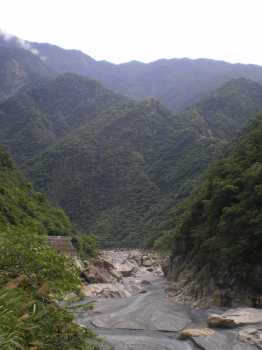


In Taipei, I discussed philosophy with a local TED talk discussion group, courtesy of my couchsurfing host, and traversed its national palace museum and Taipei 101. And in Taroko Gorge National Park, I zipped through winding tunnels, carved into the mountainside, opening up into stunning vistas of towering white marble walls and crystal azure water. For such a small, politically complex island, Taiwan offered a stimulating mixture of current affairs relevancy, sensory delight and natural beauty that makes for a well-rounded holiday, and a population that is savvy, capable and deeply accommodating to visitors. I hope it never loses that charm.

Thursday, February 3, 2011

On Sedaris in Beijing


Last week I attended a David Sedaris reading at the Bookworm, along with seemingly everybody I know within Beijing's closely interwoven expat community. It was a packed house--the event had been sold out for weeks--and the atmosphere was buzzing with excitement at the presence of such an eminent American writer, who'd traveled all the way out to entertain us with his acute observations of middle-class America.

These days, Beijing receives visits from increasing numbers of high-profile Western artists and entertainment stars and business moguls--Mark Zuckerburg recently stopped by, setting off local conversation regarding his Chinese-American girlfriend--but visits from non-China-focused writers remain rare. The previous evening, Dave Eggers had given a talk and mentioned that some of his books had been translated into Chinese, leading me to wonder: What sort of Western-obsessive Chinese reader would find Eggers' unique brand of post-modern, ironic and American self-obsession entertaining? (At least, that from his earlier work.) Similarly, how many locals would find Sedaris' witty remarks regarding middle American couples fighting in Paris amusing?

The answer, it seems, is not that many, seen in the meager handful of Chinese-Chinese in the audience. (There were, however, plenty of Western-Chinese.) Chinese do take to certain fields of Western popular literature: plenty of Times best-sellers show up in Mandarin, and books on finance and self-help are omnipresent. But humor is extremely culturally-specific, and it would take only the most inspired Western culture devotee to bother trying to appreciate this brand of it.

But in this case, Eggers and Sedaris have come because the Bookworm, an English-language bookstore and hub for Beijing's foreign intelligentsia, has paid their enormous speaker sums to drag them over. While China obviously possesses its own rich literary tradition, sadly, the vast majority of us are incapable of appreciating it. Consequently, literary life for the Chinese expat remains fairly barren, other than during the Bookworm's annual festival. Starved for such events as we were, the audience seemed particularly appreciative of Sedaris' presence.

Sedaris' reading went over very smoothly. Most of the stories would be familiar to those who've listened to his 'This American Life' contributions, but he also read out a very funny story that they turned down, about the way self-important Americans pronounce foreign words. He also shared some miscellaneous musings from his diary (excerpt: On seeing a “Marriage is between a man and a woman” bumper sticker on a handicapped woman's car, Sedaris concludes that drivers eligible for handicap spaces should not be allowed political opinions). One story was read off of his iPad, and I feared for the machine's battery life (hold on, glowing orb!). Somewhat oddly, he checked his watch frequently--it looked like something of a nervous tic--but gave the impression that he was keen not to over-run his pricey scheduled reading time. Nevertheless, the crowd gave him a rousing applause at the end of the reading.

What followed was most interesting: Sedaris asked the crowd for advice regarding procuring 'weird' postcards in Beijing, and made several references to his experience of Beijing to date. He had just arrived the night before, and explained that the experience had been quite a shock.

“If I'd come from London, that might have been different, but the fact that I just came in from Tokyo made it particularly jarring,” he said. “I was on the subway and I felt pressure against my back, as if someone was pushing me! I thought maybe somebody had fainted and fell on to me.” The crowd burst into hearty peals of laughter.

“Coming from the airport I'd wondered: 'Why are all these people running into the middle of the street?'” he continued--a reference to China's rather anarchic traffic culture--and the crowd roared madly with mirth.

Sensing that he was on a roll, he turned to a visit to a local supermarket. “At the counter, the lady had said the equivalent of 'Hey Ronnie, would ya pass me some quarters?', and her colleague threw some--overhand, not even underhand--to her.” At this point his face was bright red, a hand half-covering his face, and he struggled to contain himself. “I had to move my head out of the way…otherwise I might have been hit!” The swell of laughter was far greater than anything during the readings, and some audience members struggled to contain themselves.

Now, for some who'd only just arrived in China, or those who have never strayed from their American suburb-like enclaves, perhaps the experiences that he described may have struck them as genuinely unusual. But for anyone who's passed even a few days here, by China standards, the situations he described are extremely mild. As it is, he is staying in one of the country's most exclusive hostels, in it's most Westernized region. If he thought those moments he'd described were 'crazy', I thought, someone should take him out to the city's fringes, where the city's modern surface quickly fades and your average, non-cosmopolitan China emerges. Better yet, take him to the rural southwest, where my travels have brought me face-to-face with roasting dogs on spits and traffic maneuvers that would have looked good in Tron, were they not performed by peasants in bread vans. For someone so capable of spinning good yarns out of the tiniest minutia of domestic life, I imagine that Sedaris would quickly acquire years' worth of material within a few hours.

But the point, I believe, wasn't that the scenes Sedaris was commenting upon were particularly novel to we expats, nor was his delivery especially clever. We were laughing because this was David Sedaris, one of America's most beloved humorists, experiencing a tiny sliver of the many oddities that make up daily life in China, and we were experiencing it through his eyes. Though we ourselves may not normally laugh at such quirks, all of us have at some point and, given Sedaris' fame and innocent, wide-eyed ignorance, are able to indulge in such laughter once again. There was nothing anti-Chinese at all about his tone, or the response of the audience, though I do wonder whether the Chinese audience members might have found the spectacle offensive at all.

Having spent three and a half years here, Sedaris' comments reminded me of how few things that happen in China ever surprise me. I look out on to the same streets that I walked wide-eyed when I first arrived years ago, and all of it now seems so commonplace: the old men in Mao suits chatting outside, the carts of shouting street food hawkers, the freelance recyclers with their bicycle-carts piled precariously high with refuse. All of it, where once so utterly strange, is now the everyday. Even a few years ago, if I'd seen a car pull up on the side of the highway and a man hop out and pee against a tree, I might have uttered “What on earth is he doing?” But at this point, I acknowledge the forthrightness with which he expels his urine and walk by. The ferocity of the crowds that push and shove (in China, one never has to travels far to discover crowds), is met with gruff acceptance, and only the occasional outburst, on my part.

This familiarity extends to individual habits too. That guy in the gym lifting weights in ass shorts and flip flops? I've christened him “Ass man.” The drying cabbage which my neighbor stacks outside his door? Well, what else is one to do with cabbage in winter?! Subtly and only slightly conscious of its happening, we assimilate into everyday life; the cognitive adaptations in our personal understanding of what constitutes 'odd' only become aware to us when new visitors from abroad share their wide-eyed perceptions.

Some of it becomes old very quickly. The same familiar tropes arise, about the hilarity of Chinglish signs (I still find them funny, but only the exceptionally unfortunate ones), and the tackiness of nouveau-riche furnishing and fashion. I generally try to explain the reasons for such phenomena as part of my self-designated mission to broaden others' understandings of China. But it reaches the point where one naturally seeks out other foreigners who've lived here long enough to get beyond these early observations and who seek or possess a deeper understanding of the country. In that way, Beijing's foreign society tiers off somewhat into different levels of China expertness. What many of we young Mandarin-speaking foreigners lack in career experience and salary standing, we seek to make up for this in terms of local knowledge and gossip. Ours is a snobbery of yuppie ethnographers; while many of us would readily admit aspirations to join the ranks of those decidedly non-China savvy elites, we are particularly admiring of those who are able to do so from humble 'foreign explorer in China' beginnings. For many of us, that hero is Peter Hessler, who turned two years teaching English in the Peace Corps in rural Sichuan into a staff writer position with the New Yorker.

But sometimes, it's nice to check the China expertise hierarchy at the door and be united in our appreciation of the vast abundance of things about this society that we find so mind-bogglingly weird. In a way, it's all a bit Jerry Springer-like, where the extreme behavior of the locals makes us feel more secure about our middle-class Western civility. However, it's certainly not one-directional; I've has conversations with Chinese friends in which we've shared laughs over some of the oddities discovered while living abroad (for example: the blandness of English cuisine, the excesses of Japanese etiquette). Finally, it also invites one to ponder how much longer we'll be able to play this role of haughty expat. Who knows? Soon enough, Chinese expats will be doing the same thing, laughing amongst themselves in their literati circles in New York and Delhi about the quaint habits of these 'uncivil locals.' Perhaps they already are.

Monday, January 25, 2010

Comparing Ideas About Sexuality in China and the United States


Originally posted on Advocates for Youth site: http://www.advocatesforyouth.org/index.php?option=content&task=view&id=1552&Itemid=835

At dinner in Beijing recently a Chinese friend, a sharp 23 year-old woman named Wu, asked some Australian friends when we learned about sex.

“When we were about five,” we replied, and she went on to tell us that growing up in China, she didn’t know what was involved in sexual intercourse until college, when she had the opportunity to look it up online. Through high school, she had no idea that her father was at all involved in her creation, and she knows female friends her age who, to this day, do not understand the physical nature of standard sexual intercourse: the exact means through which males and females bond physically.

It gets better. As this discussion was taking place, another Chinese friend, Guo, a male artist in his late forties, showed up. He grew up during the Cultural Revolution, when sexuality was a truly shameful thing of which nobody spoke and the only sexual education offered was public notices condemning convicted rapists.

They would read these notices with curiosity, knowing that rape involved sex—something that as teenagers, they were naturally curious about—but still had no actual understanding of. Once, when moving through a crowded street behind a woman, one of his friends—through way of sheer pent-up sexual repression—accidentally ejaculated. The woman saw this, reported him, and the man was thrown out of university, effectively ending any chances at a decent future.

Guo was 24 when he lost his virginity. Before that, he had spent six years with a girlfriend, both of them eager to have sex, nobody stopping them, but simply having no idea how to actually do it. They were living out the opposite of a one-night stand—a six-year undesired abstinence born out of pure ignorance. One can only imagine the frustration.

When they masturbated, Guo and his friends would fantasize about non-physical things. While guiltily performing this most natural of activities, they were not drawn to the vagina, but to more subtle female elements: the shape of a classmate’s wrist, a certain scent, swimming through a female teacher’s legs during Physical Education. It was a very Austen-period sort of sexuality, as a friend put it, and having learned about the penetrative nature of intercourse from a young age, it re-conceptualized the boundaries and elements of the male erotic experience for me in a way that I had previously never considered.

As teenagers, Guo and his male friends, as with other societies, were physically intimate in the sense that they masturbated together, sometimes yanking on one another’s willies. But to them, this was not homosexual behavior. They were into girls; they were just giving each other friendly assistance with the task at hand.

In fact, they had no notion of homosexuality to begin with.

But when Guo moved to Sydney to begin his career as an artist, he started to hear people throwing around the word “gay.” When he learned what it meant, he was struck with a surprising existential crisis: “Am I gay?” he would ask himself, having previously never known that such a thing was possible. Many girlfriends later, it turns out that he isn’t, but China remains a society in which many people do not know or deny the existence of non-heterosexual people.

As the board member of an organization that advocates the early provision of a comprehensive, sex-as-a-natural-part-of-life education to young people, talking to Wu and Guo helped me to re-consider just what is “natural” sexuality within different societies. In the United States, we oppose Abstinent until Marriage education policy largely because, as results show, it simply does not work. During its enactment, teen pregnancy and STI rates increased. At a philosophical level too, we find it disempowering to young people as intelligent, capable member of societies, who should be given the knowledge and power to make informed decisions about their lives.

But with this too is the notion that, at least in the West, perhaps in part because of our sex-obsessed media and pop culture industry, young people are going to have sex, whether or not adults consent to it taking place. The question is simply do you educate them on how to do it in a safe and responsible manner.

But in China, which is undergoing a sexual revolution or sorts but in which sex largely remains a taboo subject filled with ignorance, that’s not necessarily the case. According to most of my Chinese friends—during the few times when sex is ever discussed (as a general rule of thumb, it is not, even amongst friends)—they say that while sex amongst pre-collegiate youth does happen, it is very rare. It is more common in college, but still, not at anywhere near the near ubiquitous levels at which it takes place in Western campuses.

What this means is not that we are wrong to be educating young people about sex, and that in so doing we are “enabling bad behavior,” but that sexuality within societies contains different elements. Where we in the US have struggled for decades between Puritan conservatism and the counter-cultural sexual revolution, China has and remains a very Confucian society, where sex is only just beginning to acquire its own value as something greater than procreation.

That China’s population remains woefully uneducated as to the basic nature—let alone myriad pleasures—of the sexual experience, and yet does not have the sort of teen pregnancy and STI rates that accompany such non-education in the West is not some sort of revelation that comprehensive sex education is unnecessary. Rather, it offers further example of the myriad sexual taboos that various societies have developed, and, in considering the sort of hardships and confusion that Guo and Wu faced in recent periods, hope that our world is moving towards a more tolerant, informed and empowered society.

Thursday, February 19, 2009

What happens in Mengla, stays in Mengla

China’s southernmost town of any reputable size, Mengla sits an hour away from the border with Laos, with Burma to its southwest and Vietnam its southeast. The Lonely Planet described it simply as “dire.” But after having spent the requisite day here in transit to the idyllic, thatch villages and yet-to-be-clear-cut mountains of Laos, I would have to disagree. For following our brief night on the town, it turns out we’d reached China’s own miniature Las Vegas, as in: “What happens in Mengla, stays in Mengla.”

Staggering off the bus, still wiping the grogginess from my eyes, we began the hotel search. We ended up choosing a “love” motel, as signified by the hourly rate listed behind the front counter and the two condoms that sat on the TV table inside our room (definitely not standard practice here). At 40 RMB for the night (about 6 dollars), for a decent room and en suite, it’s hard to complain. I did, however, find myself dodging more gobs of phlegm on the stairwell than usual. Though spitting is still a universal habit for many in China, a moral code appears to exist, holding that saliva should be released outdoors, in a gutter, or at least, not on the polished floor of a hotel. Not so in Mengla, unfortunately.

Later that evening, we were walking to our room from dinner—the town having not shown much to date as far as potential nightlife—when we were alerted to some sort of spectacle, by way of ear-jabbing techno pop, thumping out from a side road. At first, Judy thought it was “old lady group exercise,” found across China, whereby dozens of old women perform a series of gentle aerobics, usually in parks, to an eclectic range of tunes. In Shanghai, perhaps, but this was Mengla! Down a rocky dirt path, into a yet-to-be-rebuilt clearing, a traveling family circus was mid-show, their tinny speakers blaring, trailer truck parked behind. This is the sort of amateur entertainment show that travels year-round through scrubby Chinese towns like this one, entertaining suntanned laborers in worn, dusty suits.

A girl no more than eight years, wearing a pink tutu over faded black tights, was doing a backward arch upon a pyramid of chipped stools. That they were so crooked and poorly constructed only enhanced the act, as the stools barely managed to stand upon one another, let alone support a person. The girl, in painfully slow backward rotation, picked up a flower off the stool with her mouth, then just as slowly returned upright, holding up the flower in what should have been a dramatic posture, but which in this case only announced: “There…look, I did it again, just like I did the night before, and the 500 nights before that,” her bored scowl meeting the halfhearted applause.

Next, two boys on unicycles took to the stage, basically a small square mat of tarpaulin, wearing bright polyester that vaguely evoked, without even trying to pass for, a traditional male silk tunic. They cycled around in jerky circles, picking up a cardigan and hat that the MC, probably their father, threw to the floor. Many times they fell off, but the crowd just laughed, and the boys hopped back on. After enough circles, they began to motion to the crowd for cigarettes. After a few punters obliged, they requested lighters. The smallest one, perhaps nine, managed to light his and blow smoke at the crowd, all the while jerking around atop his unicycle, drawing some course laughter from the gradually growing ragtag audience.

We left the circus behind, traveling a few hundred metres before I stopped at a tiny dive bar to inspect the ethnic minority music video that was playing inside. Like all music videos, it featured several buxom young dancing girls. These ones, though, instead of underwear and booty shaking, flogged traditional dress—lots of metal jewelry atop head, rainbow colored clothing—tame dancing and singing in a dangerously high, whiny voice. Somehow, it seems almost all Chinese folk traditions, regardless of minority, have had the misfortune of inheriting this vocal style. One of the owners came out to convince us to drink, explaining that this was an Aini ethnic group bar.

We sat down in the shabby darkness, having decided to try Xishuangbanna province’s local brew: “Kingstar.” It was, even by Chinese standards, unappealing. Chinese beer, compared to good European beer, tends to be light, weak and flat. By custom, you drink it down in one go in small glasses while playing dice games or belting our earnest C-pop ballads. Kingstar takes all these attributes, then adds the additional quality of tasting vaguely of urine*. Bad luke-warm beer aside, we were there out of ethnographic curiousity. Aini language, at least in Romanized form, looks like a cross between Aztec and Thai, with generous amounts of playful consonant-marriage.

“Qaz qwza nga lkuxay,” the karaoke subtitles flashed, as images of made-up Aini lasses in sashayed amid palm trees and tropical flowers, or sat timidly with boys on floating bamboo barges. “Sing a song for us!,” I asked the bargirl, who got through a quarter of the song before being drowned out by the rousing interpretation of some beered-up Aini boys, probably migrant laborers. We clapped before taking leave, leaving behind our half-drunken Kingstar. In China, there are no laws about carrying alcohol, and we foreigners revel in this freedom, often swilling booze straight from the bottle en route.

Continuing home, we passed a handful of brothels, staffed by various minority girls, according to our guide, who’d taken us through several different minority hill villages the previous day. According to him, some minorities don’t possess the concept of prostitution, making it easier for them to end up in the trade. Finally, we arrived back at Love hotel, located next to a nightclub, if the music was anything to go by. But now, what was this? Music pumping from inside our hotel as well?

“It’s gonna be a loud night,” Judy predicted. Where earlier we’d been discussing how sleepy Mengla seemed, it turns out the town had been primping for some wild clubbing action.

In the mini-nightclub on the first floor were ten or so dancers, bouncing around against the epileptic trance of lights. They jumped about as if on happy pills, the men in their forties and fifties, the girls half their age. The song ended, and the dancers retired to their booths. “He jiu, he jiu!” (“Drink booze, drink booze!) the owner shouted, his shirt lifted to his chest, proudly displaying a Laughing Budda-size gut. Out in the stairwell, a john, his drunken eyes closed, had wrapped himself around a bored-looking prostitute. We wound past them, dodging the saliva gobs as we went.

It turns out that Mengla, a border town on the edge of China and Southeast Asia, could be described as a number of things. “Seedy?” Without a doubt. “Quirky” also works well. But never “dire.”

*How do I know what urine tastes like, you ask? My answer: you just do.

NB: These pics, sadly, are not from Mengla but rather Kunming and Jianshui, other places in Yunnan.

Monday, December 29, 2008

White Would Be Better

Being Overseas Chinese in China has numerous advantages. Clothes here fit me better than they do larger foreign friends, I escape the constant ogling and unwanted attention that others face and, if I were to choose to do so, I could probably settle into a more permanent life here with greater ease. But most recently, on multiple occasions, I’ve found myself on the receiving end of more racist discrimination than I ever experienced in the United States. The irony being, of course, that it’s from people of my own ethnicity. Chinese people are passing me over because I’m Chinese.

When going in to apply for teaching positions at a nearby English school, we were informed that there were no full-time positions available at that branch, contrary to what an Australian friend had told us the day before. When another friend, who is Caucasian, went into their office a few days after to enquire about openings…what do you know?! A position had just opened up again.

Soon afterward, I received a text message from a musician friend, Tim, looking for other foreigners to play some concerts around Christmas. There exists in China what we laowai refer to as “foreign monkey” work: where foreigners are paid (very handsomely, by Chinese standards) to play music, dance around in a club, model, and do promotion for businesses. The main requirement for such work is not talent or experience—most of the work is done by English teachers or foreign students--but ethnicity. Work does exist for Blacks and non-white foreigners: a woman working in entertainment showed me a video of some Black friends performing “traditional African dance” in stereotypical African clothing for a local event. But most of the time, they want White folks.

In the case of this Christmas gig, I told Tim that I’d be interested, but to check with the agent if I would be able to play. Though Chinese have tended not to say: “Whites only” up front, at this point I figure it saves both parties more trouble if I, in a nation as supposedly proudly nationalistic as China, to admit that I, though born and raised in the West, am--should I be ashamed?—in fact, yellow. Tim called back, apologizing for his agent, who said that “they already had one Chinese,” and that they were not interested in another.

“Maybe in a few years they will be more interested in how well people can play their instruments, rather than just having any White guy who doesn’t even know how to play,” Tim, a German who plays drums, said, trying to console me.

“It’ll take a lot longer than that,” I told him.

It can feel odd, discovering that the time when my skin color tends to matter least is when hanging out with foreign friends, despite being the only non-White one. Within our small bubble of liberal, college-educated Western outlooks, we laugh at the absurdity of such situations and consider at what point does the “foreign monkey” work become too close to corporate whoredom. One friend drew the line on a “Foreign Santa” competition sponsored by a giant Wal-Mart-wielding mall, which invited foreigners to dress as Santa and say “a phrase in Chinese (!)” for cash prizes.

Until recently, I’ve considered this mostly at the behest of consumers. I don’t think shifting the blame on to society relieves a nation of its racism, but in some way, it softens the blow of this now all-too-familiar snubbing. English companies charge extremely high rates, and for parents shelling out hard-earned cash toward their child’s future American degree, they want a charming, handsome young foreigner teaching little Kevin how to pronounce “these and those.” Somebody from one of those rich, developed Western nations. That somebody, to their minds, is White.

An American recruiter for one of the major English companies in China told me over brunch of a particularly tough new visa officer in Dalian, in northeastern China. Whereas the requirements for English teachers were higher than normal there—China is a haven for less qualified teachers: a bachelors degree, a proper TEFL (Teaching English as a Foreign Language) certificate, two years of education experience—there was one, surprising new kicker. You have to be White. African-American, Singaporean…Overseas Chinese? “Forget about it!,” he told me. This was the first case in many years here that he’d seen such racism at the official level.

Whiteness, as we know well the world over, holds a great deal of privilege. And while many of the foreigners who come to China bring with them some sort of “global village” openness and a desire to break down racial and national distinctions, we quickly realize how differently, and in many ways how deeply conservative, Chinese society regards race.

So what is one to do, as an Australian-born Chinese seeking a piece of the action, as so many foreigners are currently doing, in this supposed future world super power? Study as I do, my Mandarin is a long way from fluency. Beyond that, also, is the remarkable cultural chasm that, though shrinking, still exists between Westerners and Chinese. (Try as I could, I struggled unsuccessfully to get the Western concept of “muzak” through to my normally savvy tutor.) Simply put, there’s no going around it: I’m not from China. But, whereas I will never pass as Chinese, I’m not quite foreign enough either.

There’s little point in trying to single-handedly change the mindsets of 1.3 billion people: that’s not my job, and besides, people trying to change things in China who aren’t officials tend to walk on thin ice.

Part of me is ready to go home: to return to the comfort of fluent self-expression and Fox serials and, though we love to bag “PC” culture, good old anti-racism legislature. And yet, with the West’s decidedly uninviting job market, and having already gotten this far with what is, by all accounts, a difficult language to learn, I continue to stick it out. It’s hard to ignore, as well, the sheer leisure and freedom that being a foreign teacher in China provides: many jobs offer comfortable salaries on two days of work per week.

Still, there are moments at which I simply shake my head. This afternoon, my company called to invite me to a celebratory dinner, asking that I also invite a foreign friend. My girlfriend—a Canadian-born Chinese—piped up: “I’m foreign!”

“Can she be ethnically Chinese?” I asked.

“Uh…White would be better,” my Chinese colleague informed me. At this point, more out of humor than anger, I prod a little further.

“Can they be black, or brown…or yellow?” I continued, with perhaps a hint of ridicule.

“Um, I have to ask the boss,” he replied.

Tuesday, August 12, 2008

What the Games mean to the Chinese: Some Local Opinions

Last Friday evening, having secured two tables at a 600 RMB (about $80) minimum charge, I settled in with a group of friends, both foreign and local, to watch the Olympic Opening Ceremony. The whole city—nay, country was shut down as even the taxi drivers stopped on the riverside bar street to watch the theatre, projected on to outdoor screens.

“Just for one night, I will let myself be brainwashed by the propaganda,” Luxi, my tutor, who recently returned from a month backpacking in Laos, said jokingly.

Earlier in the week, when I asked my students to give an example illustrating the term “blanket marketing,” their response came immediately: “Olympics.” This entire year leading up to the event, throughout my travels in China, “Beijing 2008” has been utterly unavoidable. From storefronts to taxi radios, revolutionary monument gift shops and ethnic minority trinkets, the government’s messaging system has comprehensively penetrated every corner of the country.

At remote Qinghai Lake in China’s northwest, an area very much ethnically and culturally Tibetan, I was bemused to find a giant statue of Jingjing the panda, one of the five fuwu mascots, standing behind bronze statues of local women churning yak butter. In a Miao minority village in Guizhou, in the country’s southern interior close to Vietnam, old women in colorful costume shoved tacky trinkets of the five rings in front of me. North of Hong Kong in Guangzhou, I stumbled into a painting academy where the students’ work was being hung: all of their paintings of course, were Olympic-themed. And whilst riding a train back into Sichuan, the speakers play “Beijing Welcomes You,” the official theme song, in between C-pop ballads and hip-hop.

The Games have been described as many things by the media: as China’s “Coming Out Party,” as the setting for the resentful host nation to demonstrate its mettle by winning the highest medal count, as an example of the West’s toothless inability to stop continued oppression and mass human rights violations.

For many Chinese, the Games does indeed provide an opportunity to take pride in their collective accomplishment, in their overcoming the dramatic missteps of Mao’s past rule to now--so improbable a few decades ago--be considered a legitimate challenge to American hegemony. The Games are as much about earning the world’s respect—particularly that of the West—as it is a celebration of progress.

But others showed less concern. A guitarist friend named Xiao Di, who I’d been playing in a short-lived Beatles cover band with, could not have been more apathetic when I asked if he planned on watching the Games.

“I’m not interested in sports, so I have no reason to watch the Olympics. But if it were a band competition, then I’d definitely watch!”

Some of my local friends are eager to see China win the most gold medals. Whilst watching the U.S. roll over China in Sunday’s men’s basketball match, Aaron, an administrator at a local university, described it as a golden opportunity for China to display it’s ability before the world.

“It would be the first time that we beat America,” he noted.

Whilst changing money at a Bank of China branch—the only bank where changing currencies is authorized—I sat in the waiting area benches, where all eyes were fixed on the blurry television above us, watching the men’s synchronized diving. They watched the other competitor’s with mild interest, but everyone—even bank staff—stopped to cheer each time the Chinese pair (who ended up winning the gold) took to the boards. You could almost feel the weight of the nation’s eyes on these two young men, as they walked out to the edge, steeling themselves before they leapt.

Nobody feels the pressure, however more than Liu Xiang, who won the 110m hurdles gold in Athens and whom people are expecting to win again in Beijing. But my students said they feel more sympathy than expectation toward him.

“I’ll just feel sorry for him if he loses, because everyone expects him to win,” Jane said. “It’s not important if he doesn’t win.”

Her comments were a good example of the reasonableness and ambivalence of many ordinary Chinese in the face of the Olympics juggernaut—so promoted by states and companies here in China as outside. Where power politics and nationalism are the dominant roles that the Games tend to act out, there are many Chinese, like my student George, a troubleshooting engineer at Canon, who look beneath the hype, and view the Games simply as a chance to watch the greatest athletes in the world competing together.

Monday, August 11, 2008

Changing Money in China

I changed 2,000 RMB to US Dollars today at a Bank of China, the only bank I know that is authorized to convert money.

Outside the bank, a woman approached me soliciting money. At another chain, a security guard had offered to do the same for me when I realized I needed my passport in order to change money (Duh!, I know).

The whole transaction took about 45 minutes.

After waiting the 25 minutes or so for my number to be called, the teller sent me to another counter to fill out a form and copy my passport. They explained that the exchange rate was (August 2008) 6.8: lower than I’d expected. They had me wait another 5-10 minutes or so before sending me back over to the teller. Originally, they handed me another number slip, explaining: “Sorry but you have to line up again.”

Then—maybe after seeing my expression—the service woman said I could see if the teller would allow me to go ahead, avoiding the line. He was nice enough to do that, and after going through the paperwork and having another teller count the greenbacks, I had the net result: $290 USD finally in hand.

In Guangzhou, a trader acquaintance showed me an illegal money converter tucked into the back of a clothing store shop front. Skipping the bureaucracy, I would have gotten the money in a fraction of the time, though with greater risk of counterfeit dollars, or worse yet, getting in trouble with the state. Such are the risks that people take.